System diagnosis
Existing finish and substrate determine preparation and primer.
 818-383-2527
Fine finish · Cabinet refinishing
A disciplined sprayed coating process for kitchens, bathrooms and built-in millwork.
Request a Quote01 / Cabinet refinishing
Cabinetry is a high-touch assembly exposed to grease, steam, cleaners, hardware movement and constant handling. It requires a preparation and coating system designed for millwork—not a conventional wall or trim paint shortcut.
We evaluate the existing finish, door construction, wood species, damage, failing coatings, caulk lines and hardware before specifying the system. Doors and drawer fronts are labeled and removed for controlled preparation and spraying; boxes are finished onsite behind careful containment.
Where appropriate, we use professional 2K waterborne cabinet coatings from manufacturers such as Renner and Centurion. Product selection remains substrate- and project-specific.
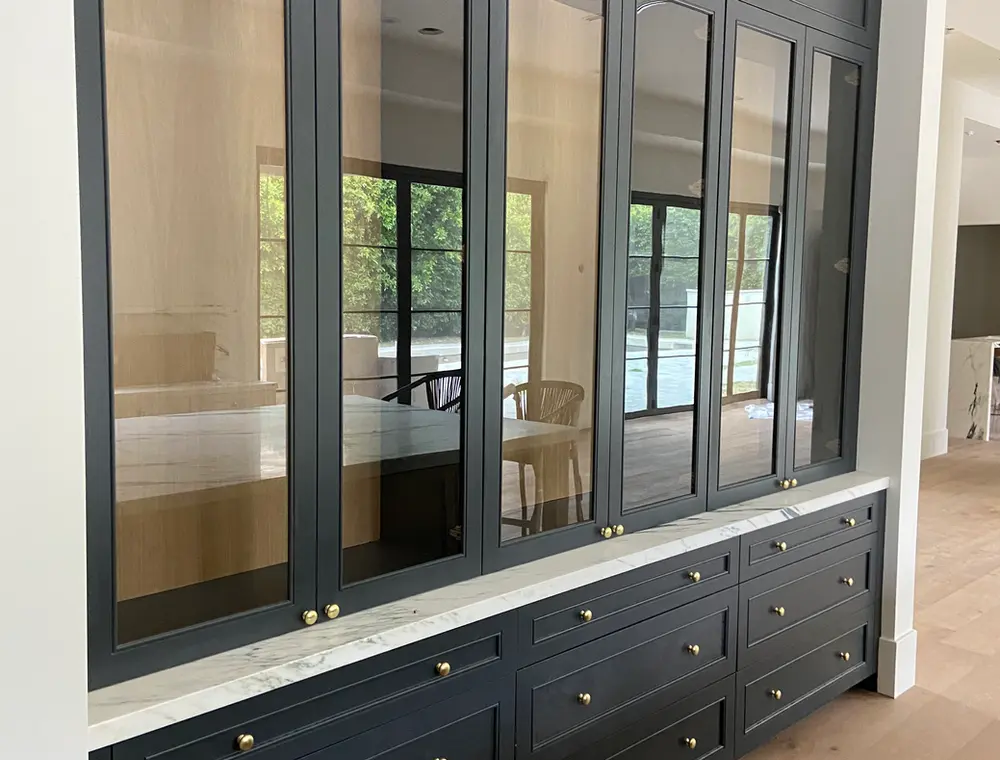
Controlled preparation and sprayed coats create a smoother, harder-wearing finish than ordinary trim paint.
02 / Professional coating systems
A catalyzed or two-component coating chemically cures to greater resistance than many conventional single-component enamels.
Professional 2K waterborne coatings can provide excellent scratch, moisture and household-chemical resistance with low odor compared with traditional solvent-heavy shop finishes. They level smoothly when sprayed and are available in refined matte, satin and higher-sheen options.
The coating does not replace preparation. Degreasing, sanding, repairs, adhesion testing and the correct primer remain essential. Oak grain, open joints, damaged veneer and failing factory coatings require project-specific expectations.
03 / What separates the process
Existing finish and substrate determine preparation and primer.
Doors and drawer fronts are finished in a controlled environment.
Cabinet boxes are isolated while the home is protected.
Fine-finish products are selected for cure, leveling and durability.
Labels, hardware and alignment are managed through reinstall.
Doors, edges and boxes are inspected under multiple light conditions.
04 / Our process
Each kitchen is documented and sequenced so doors return to the correct location and the onsite work remains controlled.
We inspect construction, coating condition, repairs, hardware, color and sheen.
Doors and fronts are labeled and removed; floors, counters, appliances and openings are protected.
Contamination is removed, surfaces abraded and agreed imperfections repaired.
Substrate-specific primer and professional topcoats are applied at the specified film build.
Components return to their locations, alignment is checked and care instructions are reviewed.
05 / Finish options
Color and sheen can modernize a room without replacing sound cabinet boxes.
One coordinated color across boxes, doors, fronts and panels.
Islands, perimeter cabinets or tall units separated intentionally.
Sheen selected around design intent, cleaning and surface condition.
The same fine-finish process can extend to bathroom, office and media millwork.
06 / Cost and care
Door and drawer count, profile detail, size, repairs, grain filling, color change, hardware and site containment.
Light use may resume before full cure, but doors should be handled carefully according to the product schedule.
Use mild soap, water and a soft cloth. Avoid abrasives, aggressive degreasers and standing moisture.
Many can, but failing veneers, thermofoil, structural damage and incompatible coatings may make replacement or repair the better choice.
07 / Common questions
Boxes are typically sprayed onsite within containment; removable doors and drawer fronts are finished offsite.
Grain can be reduced through filling and preparation, but a fully closed-pore finish requires added labor and must be specified.
Hardware changes can be coordinated. New hole layouts or carpentry are identified separately.
Duration depends on size, repairs, coating system and cure schedule. The proposal includes a project-specific sequence.
It often preserves value when boxes and layout are sound, but structural or layout problems may justify new cabinetry.
Assess the cabinetry
Send photos of the full kitchen, door profile, damage and existing finish so we can evaluate the right next step.
Request a Quote