Adhesion
Cleaning, abrasion and primer create the bond a finish needs.
 818-383-2527
Architectural coatings · Exteriors
Exterior systems specified for climate, substrate, exposure and the architecture they protect.
Request a Quote01 / Exterior painting
Exterior paint is not color alone. It must manage ultraviolet exposure, rain, humidity, temperature movement and the vulnerabilities of the substrate beneath it.
We begin by identifying why the existing coating is fading, chalking, cracking, peeling or staining. Water intrusion, failed joints, rotted wood and unstable masonry must be addressed before a new finish can perform.
Premium products such as Benjamin Moore and Sherwin-Williams exterior systems—including self-cleaning and high-durability options where appropriate—are selected according to substrate, climate, color and expected maintenance cycle.
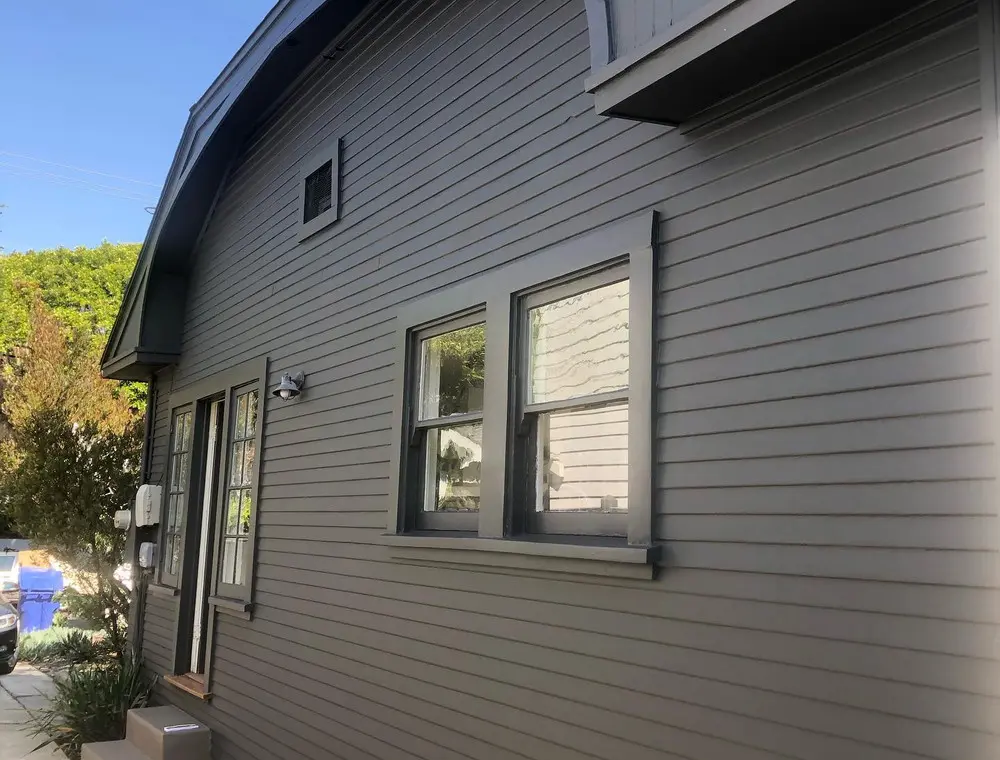
Durable exterior work begins with diagnosis, repair and the correct system for every substrate.
02 / Substrate-specific protection
The coating must move, breathe, bond and shed water in a way that suits the material underneath.
Wood siding and trim require moisture awareness, sound caulking strategy and coatings flexible enough for seasonal movement. Deteriorated wood must be repaired rather than buried.
Stucco and masonry may require mineral, acrylic or elastomeric systems depending on condition and vapor movement. Elastomeric paint is not an automatic solution for every wall.
Metal surfaces need corrosion removal, compatible rust-inhibiting primer and a topcoat suited to the exposure.
Decks and fences benefit from penetrating stains or purpose-made coatings that account for horizontal water and UV exposure.
03 / Performance priorities
Cleaning, abrasion and primer create the bond a finish needs.
Repairs and compatible coatings help avoid trapping water.
Premium pigments and resins extend color and film integrity.
Flexible systems accommodate normal seasonal expansion and contraction.
Crisp trim, doors, railings and accents define the elevation.
Periodic inspection protects the work before small failures grow.
04 / Our process
Preparation is adjusted to actual condition—not reduced to a generic pressure-wash-and-paint formula.
We review coating failure, moisture, substrate damage, access, landscaping and adjacent surfaces.
Dirt, mildew, salts and chalk are removed with methods appropriate to the substrate.
Loose coatings are removed, edges feathered, cracks and failed joints treated, and repairs completed to scope.
Bare and repaired areas receive compatible primer, followed by the specified finish system.
Coverage, transitions, cleanup and maintenance concerns are reviewed before turnover.
05 / Scope options
Exterior projects can be built around the building’s actual priorities.
Siding, stucco or masonry with coordinated trim, doors and architectural details.
Fascia, soffits, windows, casing, shutters, columns, railings and garage doors.
Penetrating stains, clear protection and opaque systems selected for exposure.
Storefronts, multifamily, hospitality and business properties with scheduling coordination.
06 / Cost and maintenance
Area, height, access, condition, repairs, masking, colors, substrate mix, equipment and occupied-site logistics.
Climate, exposure, color, substrate, preparation and maintenance all matter. South- and west-facing elevations often weather faster.
Review annually for open joints, peeling, impact damage, mildew, corrosion and water pathways.
No. Temperature, surface moisture, rain, dew and wind must stay within product requirements during application and cure.
07 / Common questions
Cleaning is essential, but pressure and method are selected for the substrate. Excessive pressure can damage wood and stucco.
Yes. The repair method depends on crack type and movement; active structural issues require appropriate trade evaluation.
No. It can be useful, but vapor behavior, existing coatings and moisture conditions must be considered.
Dark colors can increase heat gain and may not suit certain substrates or manufacturer limitations. We review the specification before approval.
Yes. Protection, access and plant clearances are planned before preparation and spraying.
Protect the investment
Tell us what is failing, what the building is made of and how it is exposed. We’ll build the right coating scope.
Request a Quote