Detailed protection
Floors, furnishings, fixtures and circulation paths are carefully contained.
 818-383-2527
Architectural coatings · Interiors
Preparation, product and sheen selected for each surface—and protection designed around the way you live.
Request a Quote01 / Interior painting
Professional interior painting is not one coating rolled across every surface. Walls, ceilings, trim, doors, windows, cabinetry and millwork each experience different light, contact, cleaning and movement.
We build the specification surface by surface. That means appropriate primers, deliberate sheen selection and products chosen for leveling, washability and durability—not simply the color name on the can.
We regularly work with Benjamin Moore and Sherwin-Williams systems, selecting the appropriate product line for the design intent, substrate, occupancy and maintenance expectations. Other manufacturer systems can be evaluated when a project specification requires them.
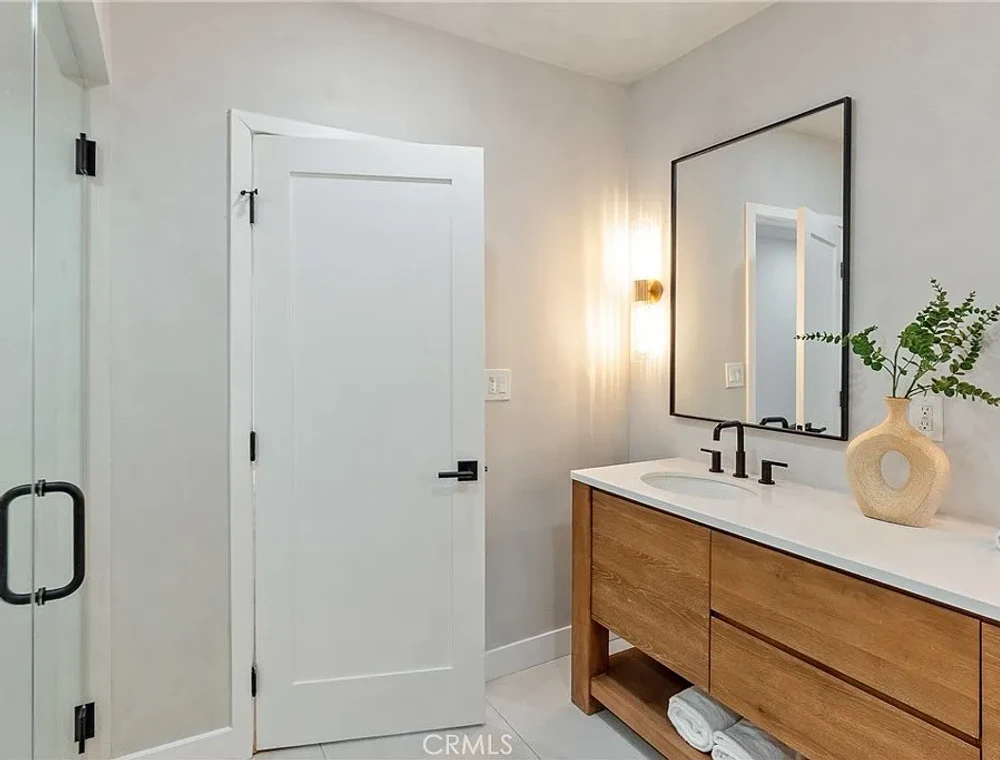
Quiet walls, crisp transitions and a finish schedule composed for the architecture.
02 / Substrate-specific systems
Longevity comes from matching preparation, primer and topcoat to the substrate and the wear it receives.
Walls and ceilings require uniform coverage and controlled sheen. Ceilings often use flatter coatings to minimize surface irregularities, while living areas may need greater washability.
Trim, doors and windows need harder, better-leveling enamel systems capable of repeated handling and cleaning. Existing oil coatings, tannin-prone woods and slick factory finishes may require specialized primers.
Cabinetry and fine millwork require a separate sprayed coating process. They should not be treated as ordinary trim; see our dedicated cabinet refinishing page.
03 / What the service includes
Floors, furnishings, fixtures and circulation paths are carefully contained.
Patching, sanding, caulking and spot priming create a coherent substrate.
Each surface receives a primer and finish suited to its demands.
Brush, roller and spray methods are selected for the desired finish.
Walls, ceilings, trim, doors and millwork are itemized so decisions stay visible.
Lighting review, punch work and orderly turnover complete the project.
04 / Our process
We establish scope, protection and acceptance standards before opening material.
We identify every included surface, existing condition, color, sheen and access requirement.
Rooms, floors, furniture and adjacent finishes are protected for the selected application method.
Imperfections are repaired to the agreed level, glossy surfaces dulled and bare areas primed.
Specified coats are applied with consistent spread rate, edge control and drying conditions.
Work is reviewed under representative lighting, corrected and returned cleanly to use.
05 / À la carte scope
Separating components keeps the proposal transparent and prevents hidden assumptions.
Whole-home repaints, room refreshes, color drenching and new-construction coating systems.
Baseboards, casing, crown, paneling and built-ins in coordinated or contrasting finishes.
Durable, smooth enamel systems with proper adhesion and detail work.
Project-specific drywall repair and surface leveling before finish application.
06 / Cost, durability and care
Surface area, height, condition, occupancy, protection, repairs, colors, sheen changes and application method.
Coverage requirements depend on product, color transition and substrate. The written scope states the specified system rather than relying on a blanket rule.
Most rooms return to light use quickly, but coatings continue curing after they feel dry. We provide product-specific guidance.
Allow full cure, then use mild soap and a soft cloth. Strong cleaners and abrasive pads can burnish or damage the film.
07 / Common questions
We define furniture moving and room readiness in the proposal. Large or delicate items may require owner or specialty-mover coordination.
Often, yes. Sequencing, ventilation and daily cleanup can be planned around occupancy, though vacant access is more efficient.
Yes, within the repair level described in the scope. Extensive skim coating or structural cracking is priced separately.
The best product depends on substrate, use, sheen, color and budget. We commonly specify Benjamin Moore and Sherwin-Williams systems.
Yes. We can coordinate samples and finish schedules; formal designer color consulting can also be included.
Plan the complete room
Tell us which surfaces are changing, how the home is occupied and what level of finish you expect.
Request a Quote