Bathroom walls and showers
Prepared tile walls, benches and niches can become one calm surface. Existing waterproofing must be verified or rebuilt where it cannot be trusted.
 818-383-2527
Surface renovation · Less demolition
Microcement overlays can give bathrooms, tile floors, countertops and fireplaces a complete visual reset without automatically tearing everything out.
Request a Quote01 / A smarter renovation path
A no-demo renovation uses the existing surface as the foundation for a new decorative system when that foundation is stable, properly bonded and suitable for an overlay.
In the right bathroom, microcement can be installed over prepared tile walls, selected shower assemblies, vanity tops and floors. The thin, continuous finish replaces the visual grid of grout with a quieter, monolithic surface while preserving much of the room beneath it.
“No demo” does not mean no preparation. Loose tile, active movement, failed waterproofing, poor drainage, moisture damage or structural problems must be corrected first. We qualify the assembly before recommending an overlay.
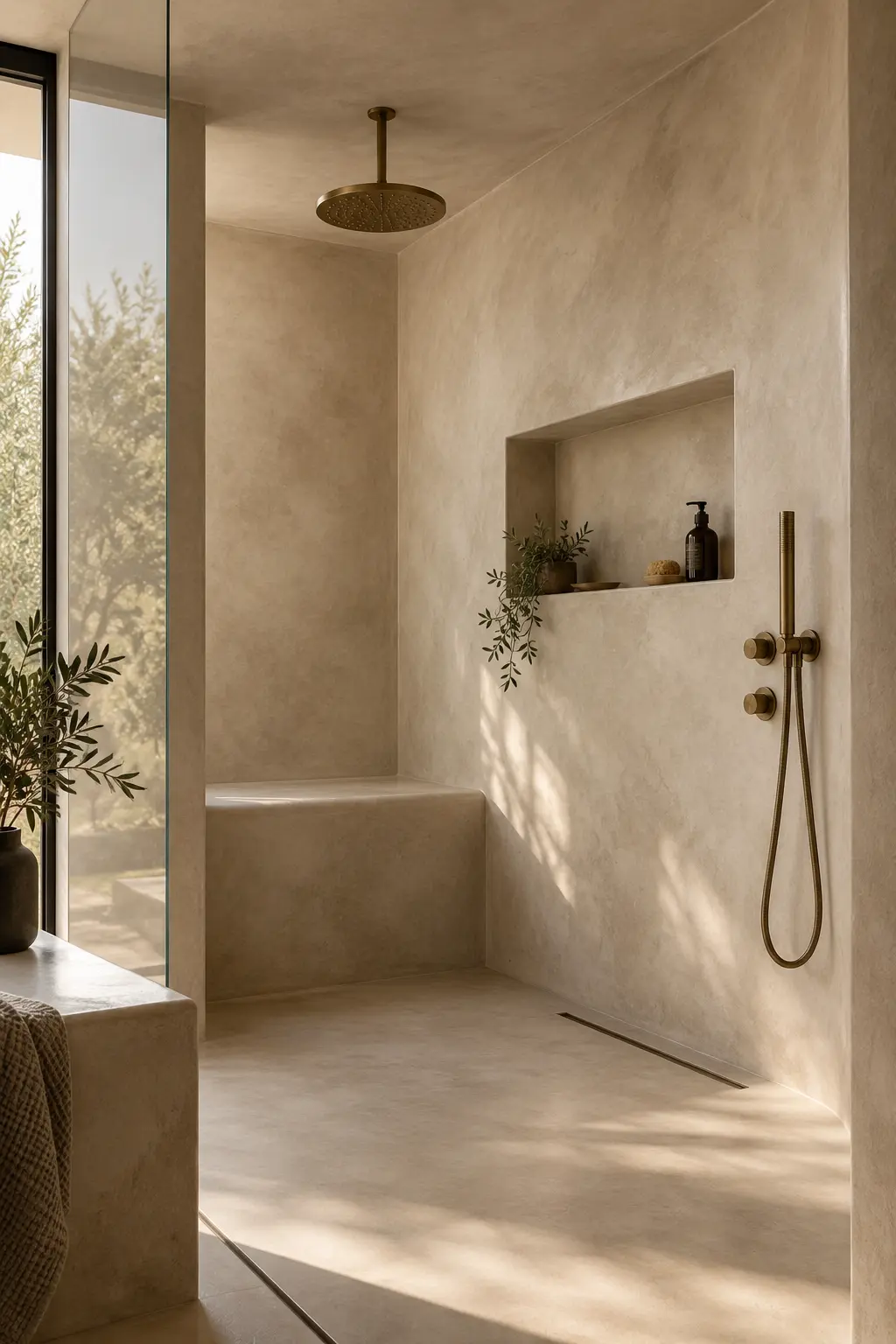
A continuous finish can change the entire bathroom while retaining a sound underlying assembly.
02 / Where it works
The material system is selected for the substrate, exposure, traffic and cleaning demands of each surface.
Prepared tile walls, benches and niches can become one calm surface. Existing waterproofing must be verified or rebuilt where it cannot be trusted.
Microcement can reshape the appearance of selected counters and integrated forms with use-specific reinforcement and sealer.
Sound tile may support a thin overlay after bond testing, grout-joint treatment, leveling and careful transition planning.
Microcement creates a modern monolithic form; Marmorino and other lime plasters add softer movement and stone-like depth where the assembly permits.
03 / What qualifies
An overlay is only as reliable as the construction beneath it.
We inspect adhesion, cracks, deflection, moisture, grout joints, slope, drains, penetrations, floor height, door clearance and transitions. Hollow or loose tile, active cracking and trapped moisture are warning signs—not details to bury.
In showers, the decorative finish is not a substitute for waterproofing. If the existing membrane or drainage assembly is unknown or failing, targeted demolition or reconstruction may still be necessary.
04 / Why consider it
Retaining sound tile can reduce hauling, dust and disruption.
Continuous finishes create a calmer, more architectural envelope.
Thin systems can preserve important elevations and transitions.
Walls, floors, counters and features can share one material language.
Color, texture and movement are developed for the actual room.
Budget can shift from unnecessary removal toward preparation and finish quality.
05 / Our process
We do not promise an overlay until the existing assembly has been evaluated.
You send wide photographs, close-ups, dimensions, age of the installation and known water or movement history.
We inspect surface bond, joints, transitions, slope, penetrations and moisture risk.
Color, movement, texture, slip needs and sealer sheen are approved before production.
Cleaning, abrasion, repairs, reinforcement, primers and successive finish coats create the new surface.
The protective system is completed and allowed to reach its required cure before normal use or water exposure.
06 / Common questions
No. The tile and underlying assembly must be sound. Active leaks, movement, failed membranes and drainage problems can require targeted or complete removal.
It can in an approved, properly prepared system, but the shower still depends on a reliable waterproof and drainage assembly beneath the finish.
Often, if the tile is firmly bonded and movement is controlled. Grout joints, floor height, slip resistance and transitions must be addressed.
Microcement creates a restrained concrete character. Marmorino and related lime plasters offer more tonal movement and a stone-like finish. Clearance, heat exposure and substrate compatibility determine the specification.
It often reduces demolition and rebuilding costs, but preparation, geometry, waterproofing and finish complexity determine the final price.
07 / Related guidance
These guides explain renovation limits, water-management requirements and microcement care.
Start with what exists
Send photographs, dimensions and what you know about the existing tile or waterproofing. We’ll determine whether an overlay is responsible.
Request a Quote