
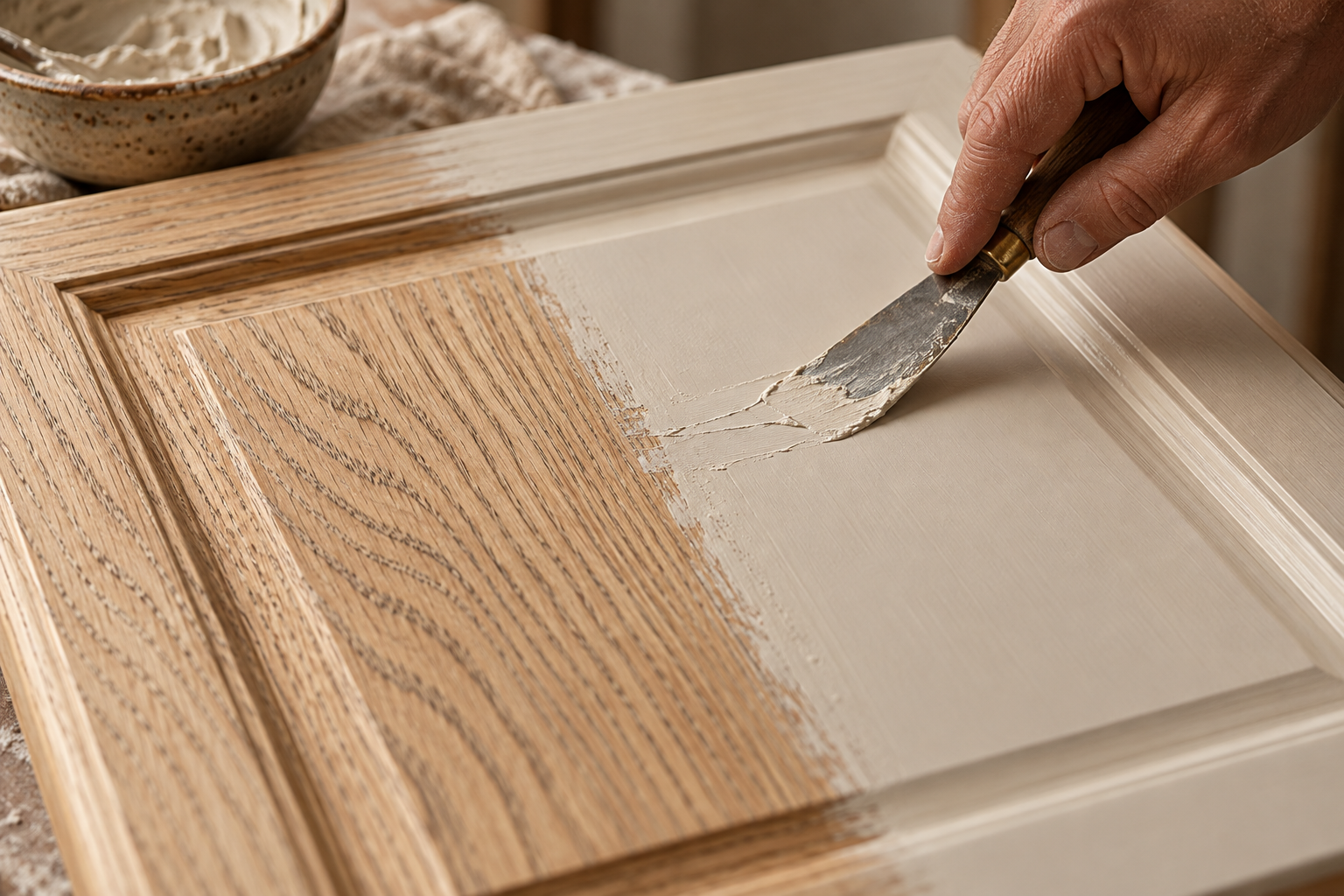
Oak’s open grain remains visible through paint unless it is intentionally filled and leveled. Some clients value that trace of real wood; others want a smoother, more contemporary surface. Both can be successful when the expectation is established with a sample door.
Choose the desired grain level
A painted-oak finish may preserve the valleys as subtle texture, reduce them with one or more filling passes, or pursue a highly leveled appearance. Perfectly erasing deep grain can require disproportionate labor and may not be appropriate for every door profile. Define the target before pricing.
Build a stable foundation
Clean thoroughly, repair splits and failing joints, abrade the existing finish and use a compatible adhesion or stain-control primer. Oak tannins and old contaminants can discolor light coatings if the primer system is inadequate. Grain filler must remain compatible with both primer and topcoat.
Understand wear and movement
No painted wood cabinet is immune to impact or seasonal movement. Hairline changes can appear where rails and stiles meet, and heavy-contact edges may eventually show wear. A durable coating, careful cure and gentle cleaning improve performance, but honest expectations are part of good specification.
Put the guidance into a real project
Turn this guidance into a sample and a schedule. Inventory every door, drawer, panel and fixed surface, then inspect edges, joints, water exposure and previous coatings. Agree on the amount of grain or texture that may remain and approve color and sheen on a real component whenever possible. The written system should name cleaning, abrasion, repair, primer, finish and curing requirements, along with removal, transport and reinstallation. This makes the result inspectable and prevents “factory-like” from becoming an undefined promise.
A practical review checklist
- Approve a sample door
- Decide how much grain should remain
- Address tannin and adhesion risks
- Use thin, compatible leveling layers
- Plan for realistic wood movement and touchups
Frequently asked questions
Can oak be made perfectly smooth?
It can be greatly refined, but the labor and risk increase with the level of filling expected.
Will the grain return later?
Texture and joint movement can telegraph as materials respond to use and environment.
What sheen works best?
Satin and low-sheen finishes are popular because they balance elegance, cleanability and surface forgiveness.