Luminous depth
Subtle tonal movement responds to daylight, shadow and the architecture around it.
 818-383-2527
Designer finish · Limewash
A velvety mineral surface with luminous variation—bringing centuries of material tradition into contemporary design.
Request a Quote01 / A living mineral finish
Coveted for centuries, limewash is more than paint. Its soft movement, matte surface and mineral depth transform an ordinary wall into something atmospheric—quiet at first glance, richly varied as the light changes.
In nature, no leaf is a single green and no stone is one uninterrupted color. The surfaces that settle us contain layers of tone, texture and evidence of time. Limewash brings that natural variation indoors without overwhelming the architecture.
Traditional limewash is made with hydrated lime, water and mineral pigments. As the finish cures, the lime reacts with carbon dioxide in the surrounding air through carbonation, gradually converting back into calcium carbonate—the mineral structure of limestone.

Quiet mineral movement gives a simple architectural wall depth without overwhelming the room.
02 / Why breathability matters
Authentic limewash remains vapor-open when used as part of a compatible mineral system. That allows moisture vapor to move through the surface rather than being sealed behind an impermeable coating.
This quality makes limewash particularly well suited to lime plaster, historic masonry, brick, stucco and other mineral substrates. On previously painted drywall, we create a compatible mineral ground using the manufacturer-approved primer before the decorative coats are applied.
Breathability is not a cure for water intrusion or poor ventilation. The substrate must be dry, stable and appropriately prepared. Our recommendations begin with the building assembly—not simply the color.
03 / What limewash brings to a room
Subtle tonal movement responds to daylight, shadow and the architecture around it.
A soft mineral appearance without the flat, uniform feeling of conventional wall paint.
Compatible assemblies can manage moisture vapor more naturally than impermeable coatings.
The surface develops character and can be refreshed without erasing its material history.
Color, movement and scale are sampled for the room rather than selected from a small chip.
Equally compelling beside historic details, contemporary millwork, stone and natural wood.
04 / Our process
Specialty finishes reward foresight. We coordinate substrate quality, samples, sequencing and protection so the final surface is not compromised by the work happening around it.
We evaluate drywall, existing coatings, plaster, brick or stucco; identify repairs; and establish the correct compatible system.
Color and movement are reviewed in the actual light of the room. The approved sample becomes the visual standard for production.
Repairs, sanding and the specified mineral primer create a consistent receiving surface. Decorative material cannot conceal poor preparation.
We maintain a wet edge and control direction, overlap and pressure to avoid hard cut-in lines, rivers, cold joints and artificial patterning.
The finish is reviewed under representative lighting, protected from later trades and sealed only when the use of the room genuinely requires it.
Bring us in early
On new construction and design-led renovations, we can consult with the owner, designer and general contractor before finish work begins. We advise on substrate expectations, primer compatibility, lighting, mockups, trade sequencing and protection.
This prevents the familiar cycle of completing specialty walls too early, damaging them with later installations and expecting invisible touch-ups from a finish whose beauty comes from continuous movement.
Explore construction coordination05 / In the work
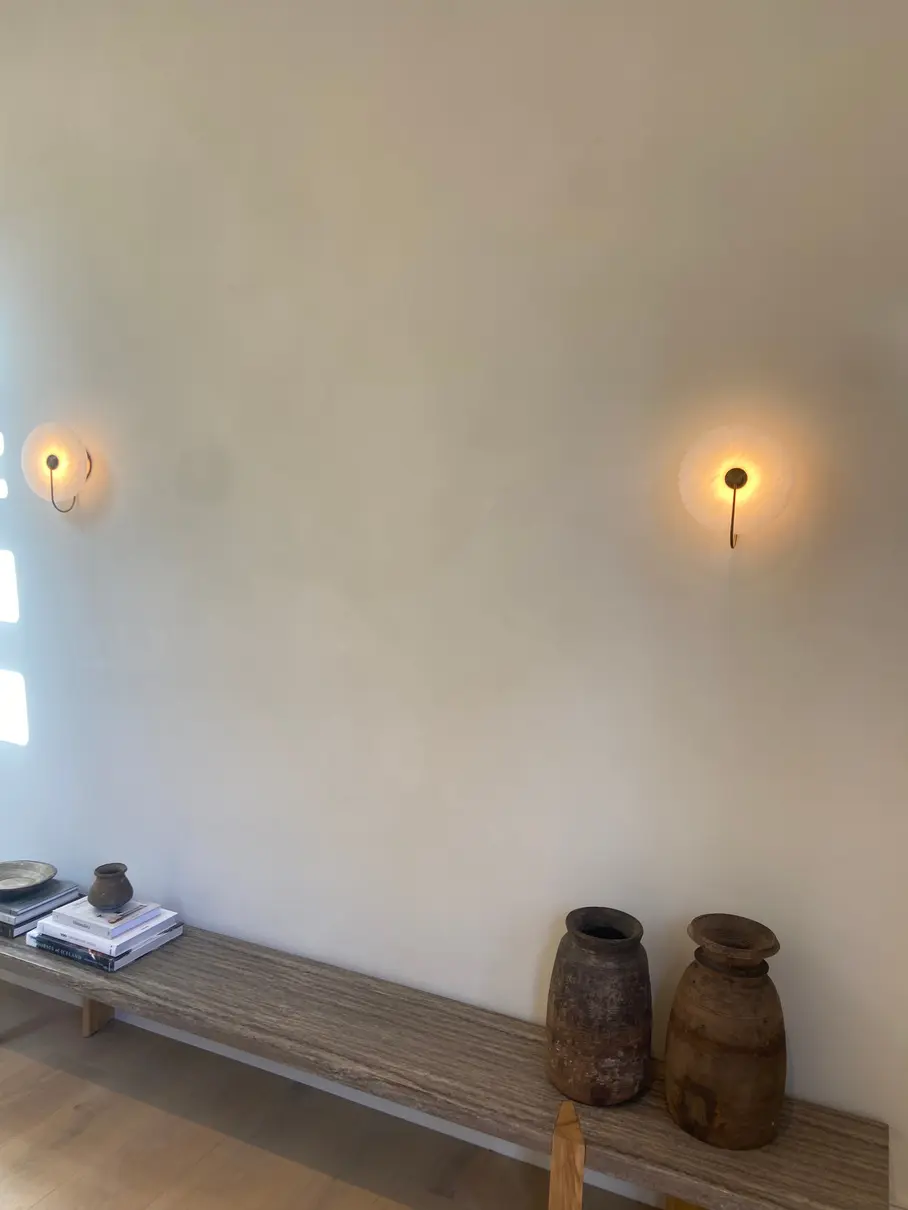
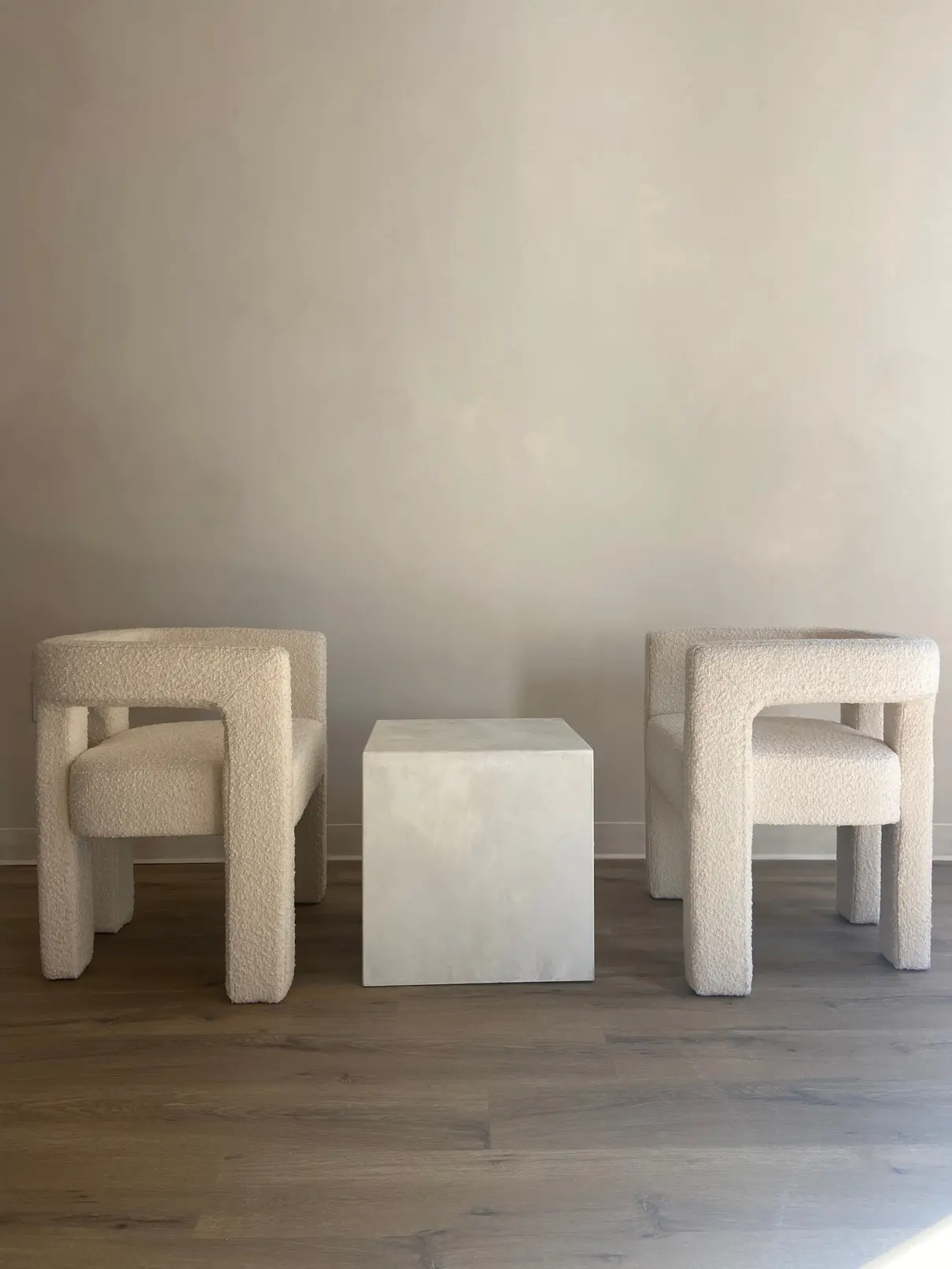
We design movement around the scale, light and material language of each room.
06 / Choosing the right finish
Limewash is brushed, atmospheric and typically more visibly varied. It excels when a room needs softness, movement and an informal mineral quality.
Roman Clay is trowel-applied, generally smoother and more stone-like. It often feels quieter, denser and slightly more architectural.
Neither is automatically better. We select the finish according to the substrate, use, lighting, desired movement and maintenance expectations.
Explore Roman Clay07 / Cost, durability and care
Pricing is shaped by wall area, height, substrate condition, preparation, access, number of colors, approved sample complexity and whether the work must be sequenced around an occupied home or active construction site.
Yes, when the substrate and system are appropriate. Its matte mineral surface is not identical to a scrub-resistant acrylic coating. High-contact areas may require a compatible sealer, understanding that sealing can subtly change appearance and breathability.
Gentle dusting and light cleaning are preferable to aggressive scrubbing. Localized repairs can remain visible because limewash is naturally varied; a controlled refresh of the larger plane often produces the most coherent result.
Living rooms, bedrooms, entries, ceilings, feature walls, fireplaces and selected masonry exteriors. Wet rooms and high-wear surfaces require project-specific evaluation.
08 / Common questions
Usually, yes. The wall must be sound and properly prepared, followed by the manufacturer-approved mineral primer that creates a compatible receiving surface.
Most systems use a mineral primer followed by two decorative coats, but product specifications, color and the approved sample determine the final system.
Absolutely. Its restrained movement pairs especially well with clean architecture, natural stone, wood, linen, plaster and refined millwork.
It can be gently maintained, but it does not behave exactly like a high-performance acrylic wall paint. Where greater washability is required, we can evaluate a compatible matte sealer and show its visual effect on the sample.
In appropriate areas, yes. Ventilation, direct water exposure, substrate and the complete finish system must be evaluated. Limewash alone is not a waterproof shower finish.
Some authentic limewash products are zero-VOC and others are classified as very low-VOC. We verify the technical data for the specified limewash, pigment, primer and any sealer rather than making a blanket claim.
Small repairs may blend into highly varied finishes, but invisible spot touch-ups cannot be guaranteed. Depending on lighting and movement, refreshing the full wall plane may be the better result.
Yes. Samples establish color, texture and movement before production and form an important part of our approval and quality-control process.
09 / Further reading
Explore the full limewash Journal collection: history, breathability, modern architecture, cost, and care.
Begin with the right surface
Tell us about the architecture, substrate and feeling you want the room to hold. We’ll help determine whether limewash is the right material.
Request a Quote