
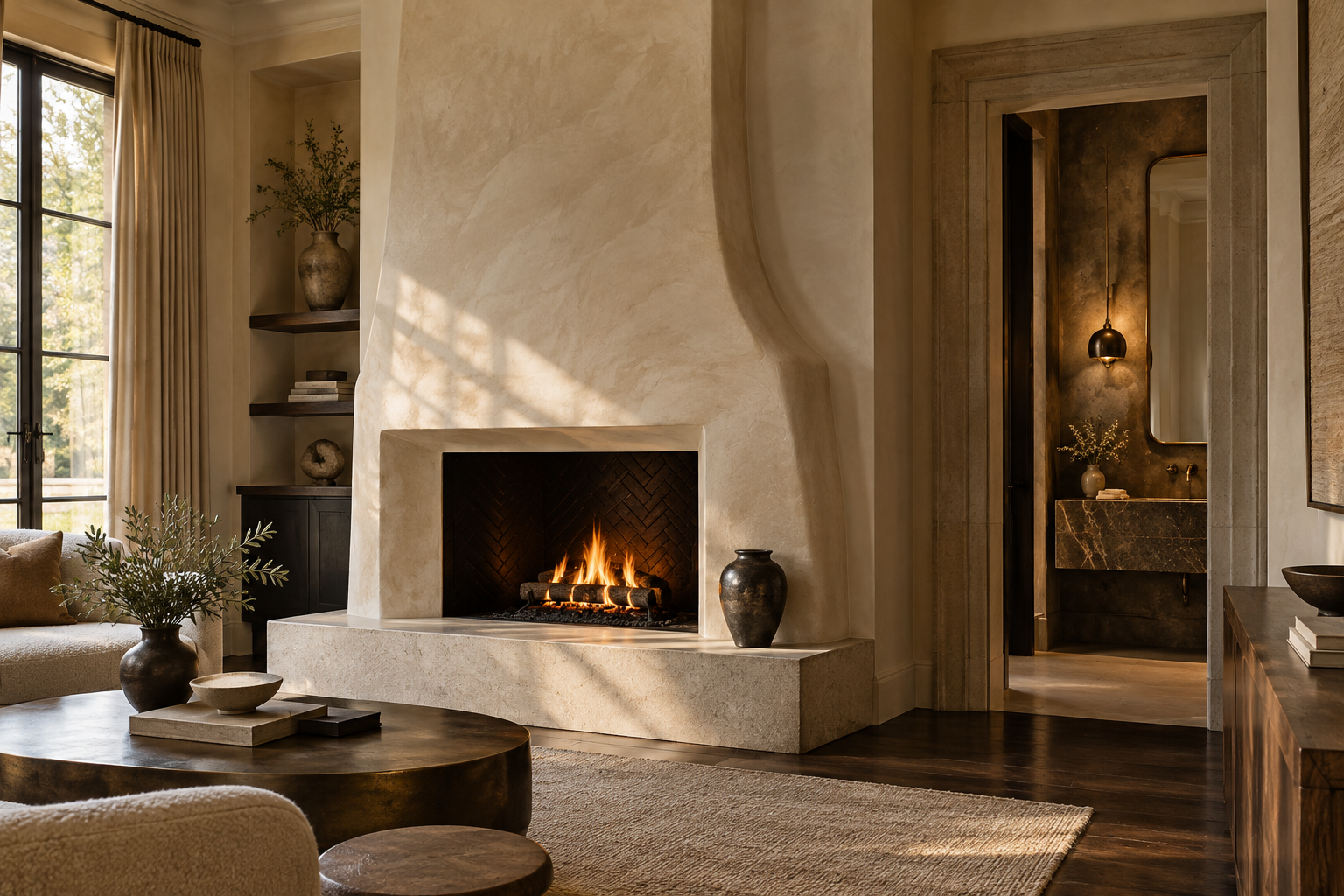
Bathrooms and fireplaces are natural settings for Venetian plaster because both benefit from a continuous stone-like surface. They are also locations where performance questions matter. Moisture, heat, cleaning and substrate movement can turn a purely aesthetic decision into a technical one. The finish must be specified for the actual conditions rather than selected by name alone.
Powder rooms and bathroom walls
Powder rooms are excellent candidates. The walls receive humidity and occasional splashes but not constant direct water. A suitable plaster with an approved wax or sealer can create depth without grout lines, while the small scale allows richer color and more expressive movement.
On bathroom walls outside the shower, ventilation and cleaning expectations guide the protective treatment. Polished surfaces may be easier to wipe than open matte textures, but every product differs. The sample should include the final wax or sealer so the owner understands any change in color or sheen.
Inside showers
“Venetian plaster” is not a universal waterproof specification. Some specialized lime systems, including properly executed tadelakt, are designed for wet use. Many decorative polished plasters are not intended for constant direct water. Even when a manufacturer approves a product for a shower, the wall assembly still requires appropriate waterproofing, drain detailing and substrate preparation.
Do not assume that polishing or waxing ordinary plaster makes it a shower system. The technical data for the exact product controls the decision.
Fireplace surrounds
Fireplaces can showcase the mineral depth of Venetian plaster beautifully. The finish can unify a large chimney breast, soften angular architecture and reflect firelight with a quiet glow. Before application, however, the substrate and heat conditions must be reviewed.
Combustible-clearance requirements belong to the fireplace manufacturer and building code. The decorative finish does not change them. Cracking in masonry, movement between board and metal, heat staining and inappropriate patching materials should be addressed before finish work.
Gas versus wood-burning conditions
Gas fireplaces are often more predictable, but heat output and venting still vary. Wood-burning fireplaces introduce soot and more irregular heat. Highly absorbent or pale matte finishes near the opening may require additional protection and careful cleaning expectations. A sample near the actual light and material palette helps establish the right sheen.
Detail transitions before plaster begins
Metal trims, stone hearths, mantels, access panels, switches, glass, plumbing trim and cabinetry all create edges. The plaster installer should be involved before those details are finalized. Clean shadow gaps and planned stops look intentional; caulked improvisations rarely do.
The best locations pair the finish’s beauty with conditions the product can genuinely handle. Read about wall preparation, compare plaster finish families, or visit the complete Venetian Plaster guide.