
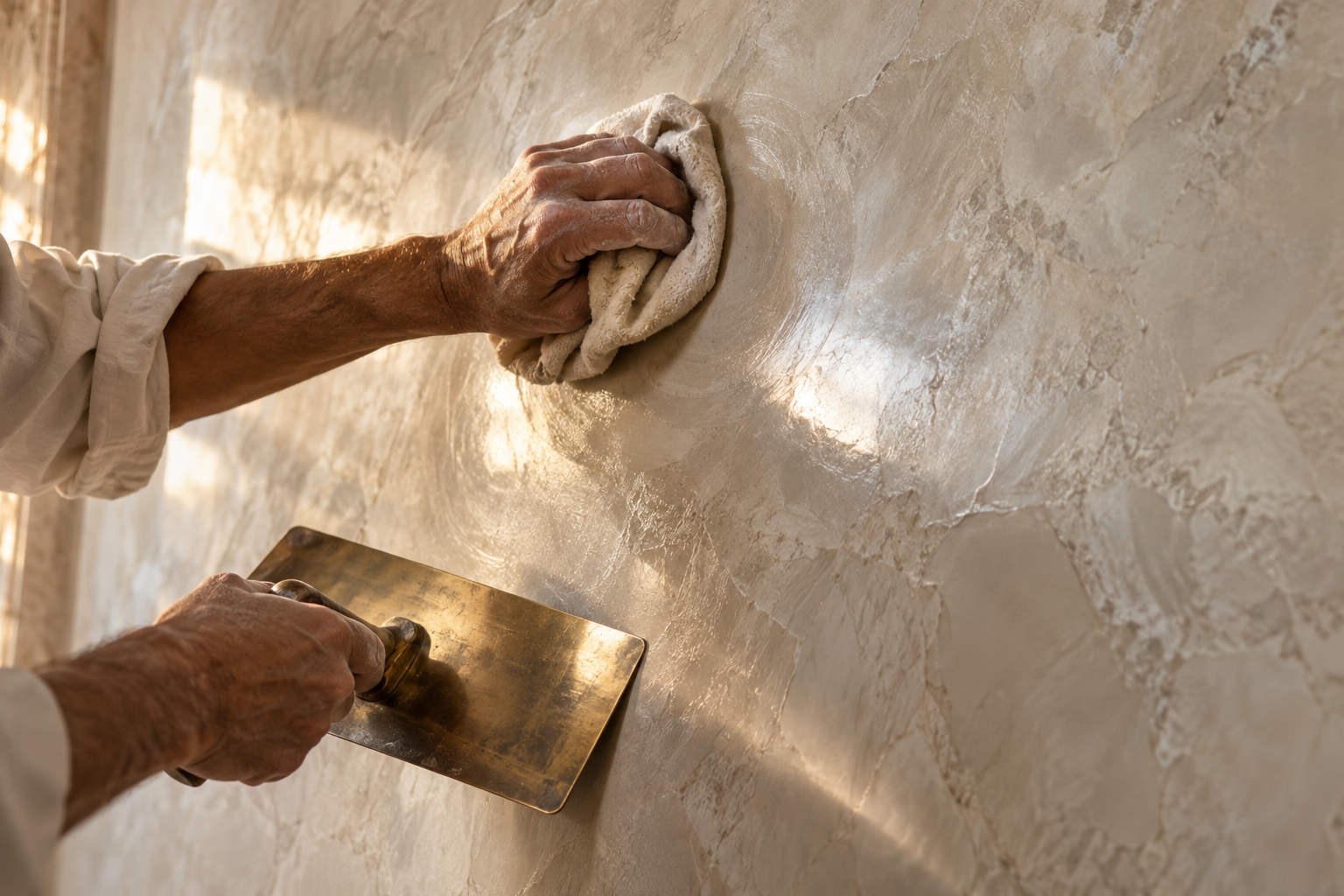
Venetian plaster ages differently from ordinary paint. Its color and sheen come from layered mineral material, compression and sometimes wax or sealer. That depth is part of its beauty, but it also means cleaning and repair should respect the original system. Aggressive scrubbing or an incompatible coating can change the wall more than the mark being removed.
Know which finish you have
Care begins with the product record. Matte Marmorino, polished lime plaster and synthetic decorative plaster may respond differently to water and cleaners. A waxed surface is not maintained the same way as a two-component sealed surface. Keep the manufacturer, color, batch information, protective treatment and sample if possible.
Routine cleaning
Dust with a soft microfiber cloth or clean brush attachment. For marks, begin with the least aggressive method: a barely damp soft cloth and a cleaner approved by the manufacturer. Test in an inconspicuous location. Avoid melamine sponges, abrasive powders, strong acids and household degreasers unless specifically permitted; they can flatten burnish, create a dull halo or remove wax.
Do not judge the surface while it is temporarily wet. Mineral finishes may darken until moisture evaporates.
Wax and protective treatments
Wax can enrich color, increase sheen and provide limited resistance to handling and moisture. It is not the same as a waterproof membrane or high-performance clear coat. Rewaxing should be based on product guidance and actual wear, not an arbitrary annual ritual.
Modern sealers can offer stronger stain resistance but may change the natural feel of the plaster. Any recoat must be compatible with the existing layer. Applying a random clear finish can cause clouding, adhesion failure or an unnatural plastic sheen.
Scratches and burnish marks
Some marks affect only wax or sealer and may be correctable with localized maintenance. Others compress or cut into the plaster itself. A dark line can sometimes be metal transferred from a tool or object rather than a deep scratch. Diagnosis matters because sanding the wrong mark may enlarge it.
Highly polished surfaces reveal changes in reflection. Even if color matches, a repair with a different degree of burnish can remain visible.
Cracks and patches
A crack should be traced to its cause. Drywall movement, dissimilar substrates, structural settling or heat around a fireplace may continue after cosmetic repair. Stabilize the condition first. Because Venetian plaster movement is built across overlapping passes, small spot patches can look isolated. Extending the repair to a corner, reveal or full architectural plane often creates a more convincing result.
Protecting the finish
Avoid adhesive tape directly on the plaster. Coordinate furniture installation, artwork, fixtures and millwork so drilling dust, silicone and metal edges do not damage the surface. Retain touch-up material when practical, but understand that aged plaster and fresh material may differ slightly.
Read our guide to preparation and application, explore bathrooms and fireplaces, or visit the complete Venetian Plaster page.