
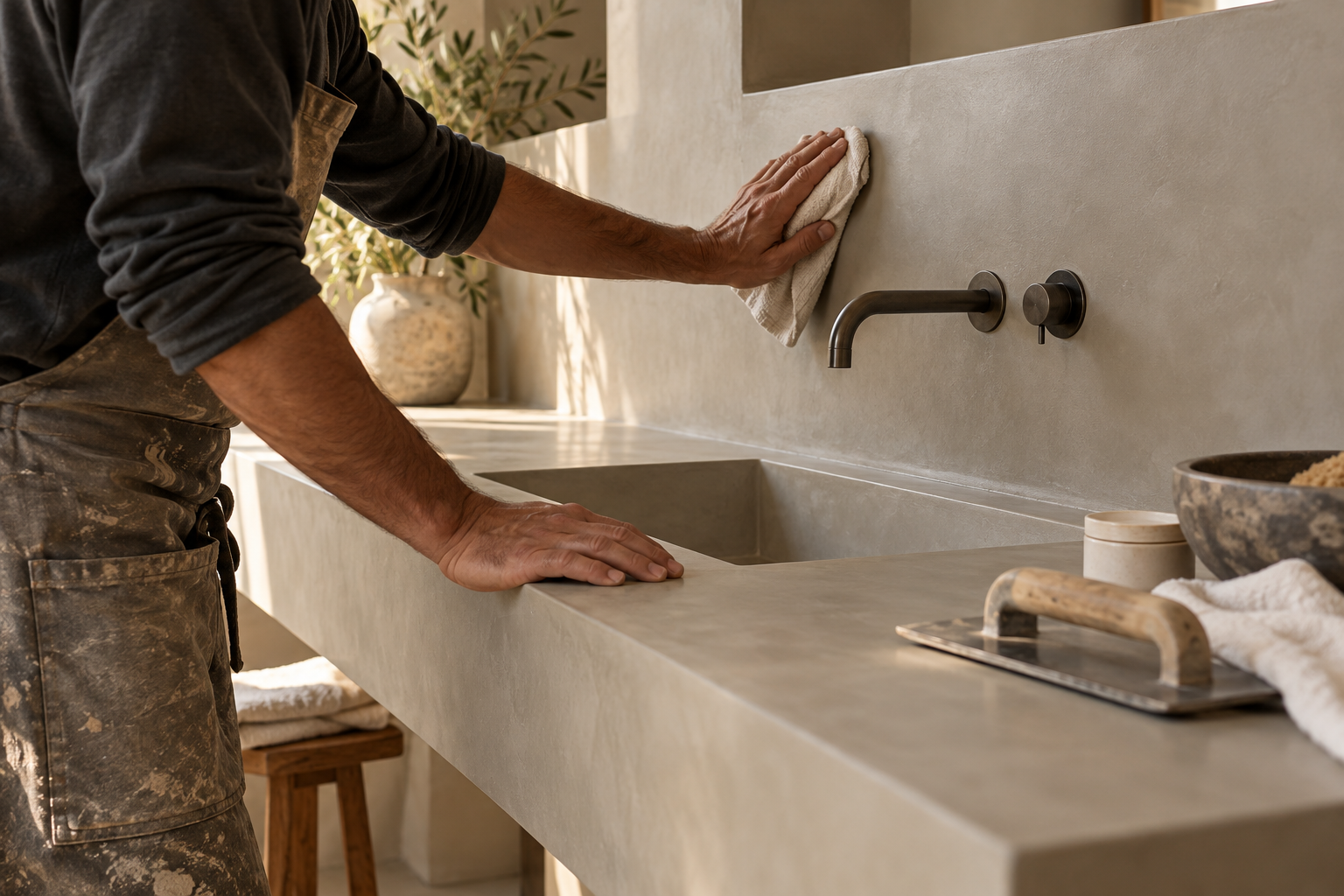
Microcement is durable, but it is not maintenance-free. The visible finish is part mineral surface and part protective coating system. Daily performance depends heavily on the sealer, especially in showers, on floors and around vanities. Caring for that wear layer preserves the finish and reduces the likelihood that water, oils or cleaning chemicals reach the decorative coats below.
Routine cleaning
Use a soft cloth or mop and a pH-neutral cleaner approved for the installed system. Avoid abrasive pads, powdered cleansers, aggressive degreasers, acids and bleach unless the manufacturer specifically permits them. Harsh products can change the sheen gradually, creating dull patches that are more visible than a single scratch.
In showers, rinsing soap residue and allowing the room to dry helps. Good ventilation matters because constant moisture and product buildup place more stress on the sealer. On floors, felt pads, entry mats and prompt removal of grit reduce scratching.
What wears first?
The sealer normally receives the wear before the microcement itself. Early signs can include reduced water beading, increased darkening when wet, persistent staining, localized dullness or a change in texture. These do not automatically mean the entire finish has failed, but they are reasons to have the surface evaluated.
Edges, drain areas, vanity fronts and traffic paths deserve special attention. A shower used twice daily will age differently from a powder-room wall.
When should microcement be resealed?
There is no universal calendar. Product chemistry, number of sealer coats, surface use, cleaning habits, ventilation and water quality all matter. Manufacturer guidance provides the starting point, but actual wear should determine timing. Preventive resealing is usually simpler than restoring a surface after moisture or staining has passed through a compromised coating.
Before resealing, the finish must be thoroughly cleaned and compatible with the new coating. Applying an unknown sealer over the original can create adhesion, sheen or color problems. Keep a record of the installed product system and color.
Can microcement be repaired?
Minor scratches in the sealer may be addressable with careful recoating. Damage that reaches the decorative layer is more complex. Because microcement contains hand-made movement, a small patch may differ in color, texture or sheen. Repairs often look better when expanded to a natural break, full wall plane or defined architectural area.
Cracks require diagnosis before cosmetic work. If movement in the substrate caused the crack, simply filling the surface will not prevent recurrence. Water intrusion, loose tile or flexing board must also be corrected first.
Protect it during construction
Many failures occur before the owner begins using the room. Other trades can scratch uncured sealer, trap moisture under protection or contaminate the finish with silicone, grout, adhesives and metal filings. Protection should be breathable where required and removed according to the installer’s schedule. Fixture and glass installation must be coordinated so drilling and sealants do not damage the completed surface.
A written care guide and product record should accompany every installation. Continue with our guides to shower waterproofing and microcement cost, or review the complete Microcement page.