
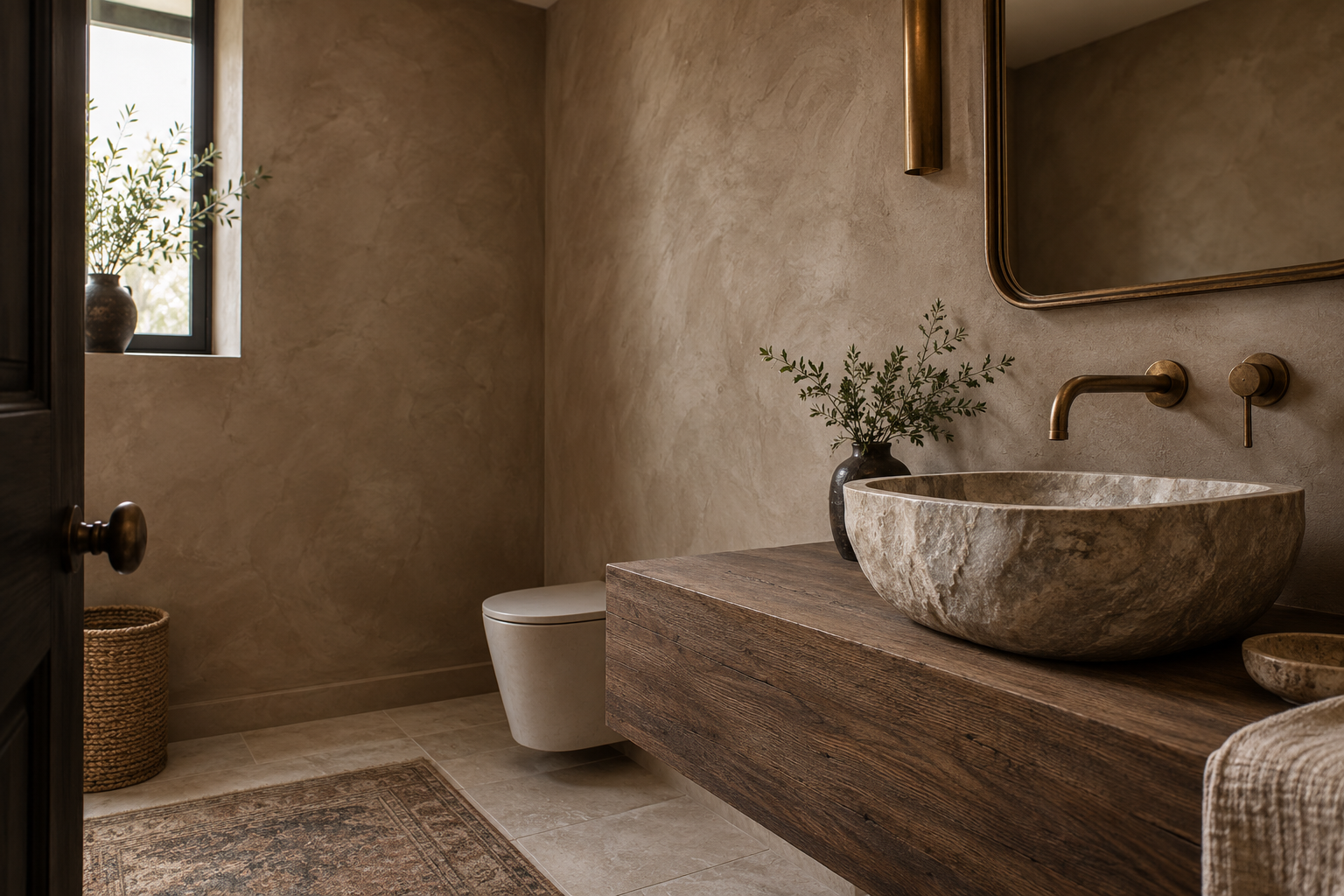
Roman Clay can create an exceptional bathroom: soft, monolithic walls; subtle movement; and a calm alternative to uniform paint. But the phrase “bathroom wall” covers very different levels of exposure. A powder room wall, a vanity backsplash and the inside of a shower are not the same technical condition.
The safe answer is simple: Roman Clay can work in dry and carefully selected low-splash bathroom areas. Standard Roman Clay should not be assumed to be waterproof or suitable inside a shower.
Where Roman Clay usually works well
Roman Clay is often appropriate in powder rooms, toilet rooms, dressing areas and bathroom walls located outside direct splash zones. It can also work on ceilings where ventilation is adequate and condensation is controlled.
These areas allow the finish to deliver what it does best: a matte, stone-like plane with hand-troweled variation. A compatible topcoat may be specified when greater wipeability is needed.
Where Roman Clay needs caution
Walls immediately behind a frequently used sink, around a bathtub used by children, or beside a shower opening receive more water, cosmetics and cleaning products than a typical living-room wall. Even when a topcoat is available, staining and edge failure remain possible if water sits on the surface or finds a path behind it.
Before approving Roman Clay in these locations, consider the exact product, substrate, ventilation, cleaning expectations and detailing at countertops, fixtures and transitions.
Why a sealer is not the same as waterproofing
A decorative topcoat can make Roman Clay more wipeable and resistant to ordinary dirt. It may also add sheen and deepen the color. That is different from a tested waterproofing membrane or a finish designed for continuous direct water exposure.
Portola states that its Roman Clay Topcoat was not designed to be waterproof or to prevent oils and grease from staining. The company recommends it for high-traffic areas, including some bathroom applications, while warning against constant direct contact with water. That distinction should control the specification.
Can Roman Clay go inside a shower?
Not unless the specific manufacturer expressly approves a complete shower system—and most standard Roman Clay products do not. A clear coat added over an unsuitable finish does not convert it into a reliable shower assembly.
Shower performance depends on more than the visible surface. The substrate, membrane, penetrations, corners, drain transitions, curing and maintenance must all work together. Decorative plaster should never be asked to compensate for missing waterproofing behind it.
Better finishes for direct water exposure
Tadelakt is a traditional Moroccan lime plaster compressed and treated with olive soap to create a water-resistant surface. It requires specialized technique and a properly prepared assembly. Microcement is a modern cementitious decorative system typically protected with resin or polyurethane sealers. It can create a seamless wet-area appearance when the complete manufacturer system is installed correctly.
Neither finish is maintenance-free, and neither removes the need for correct waterproofing beneath the decorative surface.
What about Moroccan Clay?
Moroccan Clay is also generally specified as an interior decorative wall finish, not as a shower membrane. Meoded recommends optional protective treatments for moisture and dirt, but the selected sealer must be evaluated for the exact exposure. “Moroccan” in the product name should not be mistaken for tadelakt.
Ventilation still matters
A beautiful bathroom finish cannot correct poor ventilation. Exhaust capacity, run time, room volume, HVAC balance and habitual moisture all affect the wall. Persistent condensation can damage decorative finishes and encourage problems within the assembly, regardless of the marketing claims attached to the coating.
How we specify Roman Clay in a bathroom
We begin by mapping the room into exposure zones. Dry walls and ceilings are considered first. Splash-prone areas are reviewed with the manufacturer. Direct-water zones are assigned a purpose-built system. We then prepare a sample showing the actual color, sheen and protective treatment.
The sample matters because a topcoat may darken the finish or make it read more uniformly. It should be approved next to the stone, tile, plumbing finish and bathroom lighting—not in isolation.
Cleaning and maintenance
Use the mildest cleaning method permitted by the product manufacturer. Avoid abrasive pads and harsh chemicals. Blot water and cosmetics promptly. If a protected Roman Clay wall receives frequent contact, expect periodic inspection and possible renewal of the protective coat.
For a broader comparison, read Roman Clay vs. Venetian plaster vs. limewash. You can also explore our microcement guide for modern wet-area surfaces and our Roman Clay finish page.
Technical references
See Portola’s current Roman Clay Topcoat guidance and the Meoded Moroccan Clay system information. Confirm current product documents before installation.