
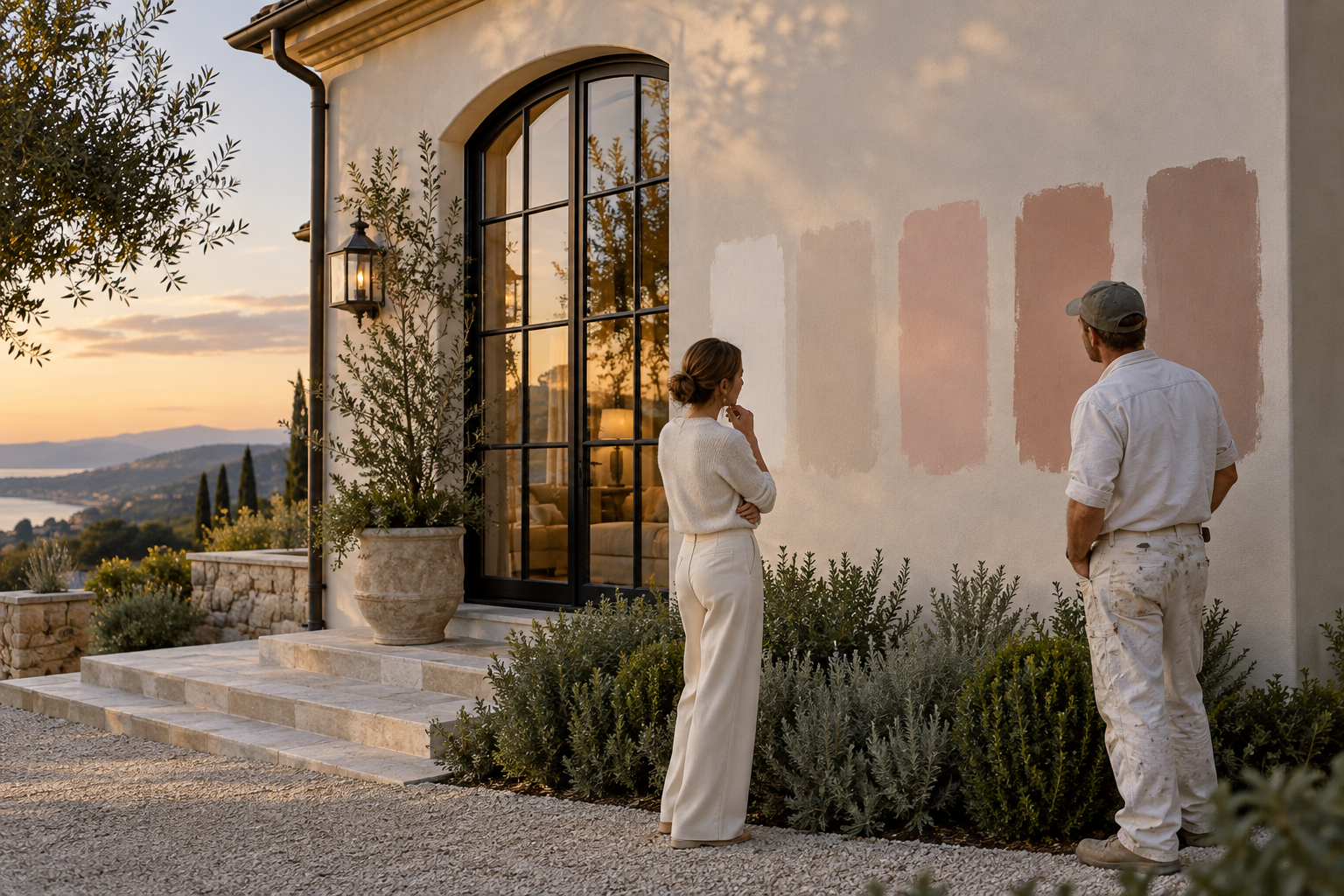
An exterior color is never viewed in isolation. It sits beneath the blue cast of the sky, beside stone and roofing, within reflected landscape and across surfaces that may receive radically different sun. Large, well-placed samples are the reliable way to judge it.
Sample at architectural scale
Place samples where body color meets trim, roof, masonry or metal. A tiny patch surrounded by the old color can distort perception, so use boards or generous test areas. Repeat the finalist on more than one exposure when the house changes dramatically from front to back.
Watch the full day
Morning light, midday sun, late-afternoon warmth and exterior lighting can shift undertones. Warm whites may become yellow in one exposure and calm in another. Muted pinks, taupes and greens are especially dependent on adjacent materials. View samples from the street as well as up close.
Confirm product and sheen
Sample the actual exterior product whenever possible. Substituting an interior sample paint can misrepresent sheen, texture and color depth. Once selected, document manufacturer, product, color formula and sheen so later maintenance does not depend on memory.
Put the guidance into a real project
Apply this guidance facade by facade. Note the substrate, exposure, existing coating, cracking, open joints, drainage, landscaping and access conditions on every elevation. South- and west-facing surfaces may weather differently from protected walls; wood trim may need a different system from stucco or metal. Photograph representative failures and agree on repair limits before work starts. The final scope should connect washing, preparation, repair, primer and finish to the actual condition of each material, with weather windows and protection responsibilities clearly assigned.
A practical review checklist
- Use large samples
- Test body and trim together
- View every major exposure
- Compare with fixed roof, stone and metal
- Approve the actual product and sheen
Frequently asked questions
How many colors should I test?
A short list of two to four carefully chosen options is usually more useful than a wall of near-duplicates.
Can digital renderings replace samples?
They help narrow choices but cannot reproduce site light or material texture.
Should gutters match trim?
That is a design decision; samples should show whether the gutters should blend, frame or disappear.