
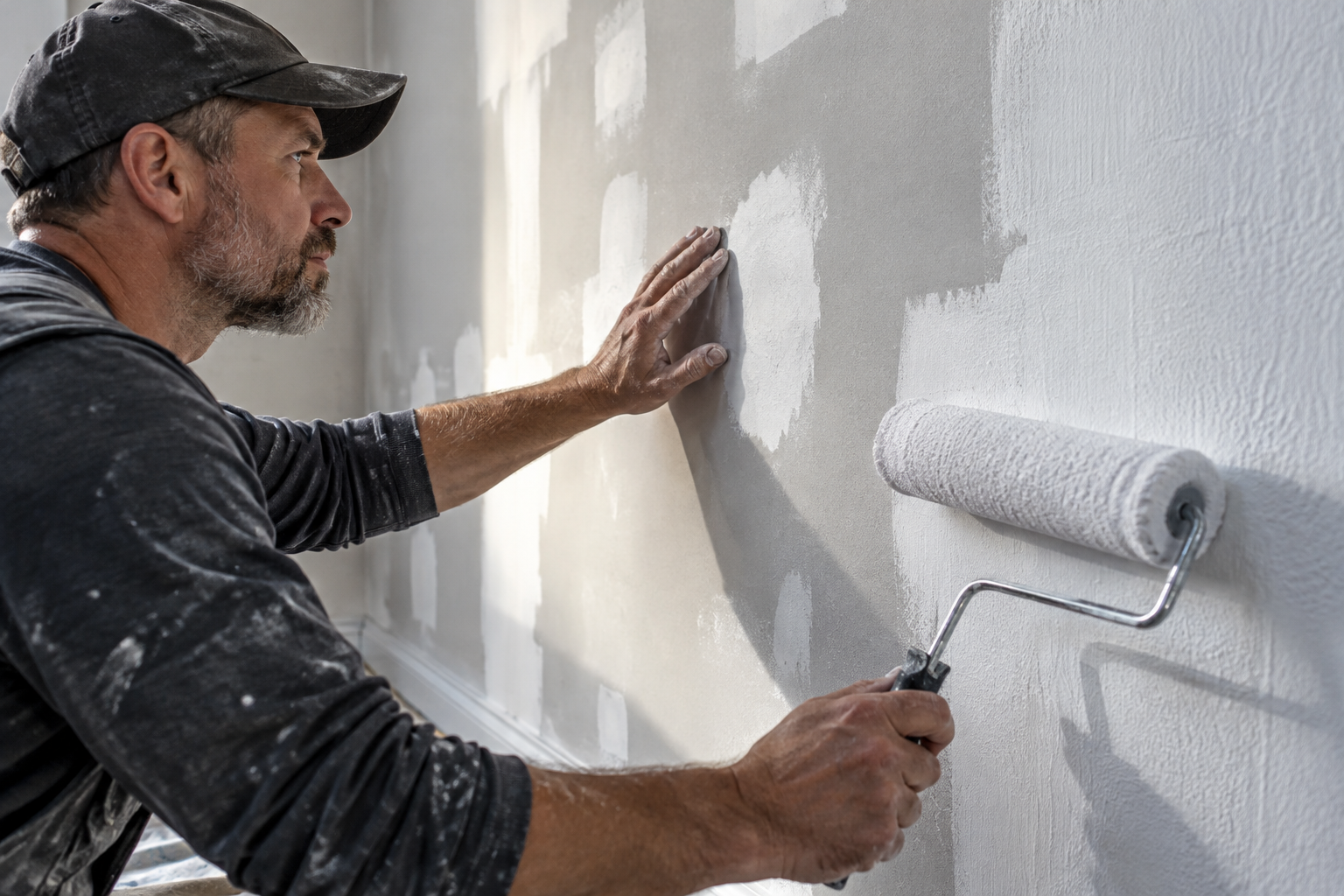
Primer is not a ceremonial first coat. It is selected to solve a specific problem between the substrate and the finish paint: uneven porosity, weak adhesion, staining, odor, tannin bleed or a difficult color transition. When none of those conditions exists, a full prime coat may be unnecessary.
Conditions that call for primer
Bare drywall and joint compound absorb paint differently and should be sealed for uniformity. Glossy or unknown coatings may need an adhesion primer after cleaning and abrasion. Water marks, smoke residue and certain inks require a stain-blocking system. Bare wood and knots may need primers designed to control tannins and resin.
What “paint and primer” really means
Self-priming finish paints can provide strong hide over a sound, previously painted surface. They do not replace specialized primers when the substrate has an adhesion or contamination problem. A topcoat engineered for color and durability cannot be expected to perform every sealing task equally well.
Spot priming versus full priming
Small repairs can sometimes be spot primed, but repeated patches may flash through the finish because repaired and existing areas absorb light differently. Full priming is often worthwhile when repairs are extensive, sheen is increasing or strong side light exposes variation. The decision should follow a test area, not habit.
Put the guidance into a real project
Use this guidance during an in-person walkthrough, not as a substitute for one. Record each substrate, existing sheen, visible repair and color transition room by room. Discuss how the space is lit and viewed, which belongings remain, and what “finished” means at walls, ceilings, trim, doors and built-ins. Ask for a representative sample when sheen, patching or millwork quality is difficult to describe. A detailed written scope should connect those observations to preparation, primer, finish coats, protection and inspection. That gives both owner and painter the same standard before production begins.
A practical review checklist
- Identify the substrate and existing coating
- Clean contaminants before sanding or priming
- Choose primer for the specific failure risk
- Respect dry and recoat times
- Test adhesion and stain blocking before proceeding
Frequently asked questions
Do patched walls need primer?
Yes. Joint compound is porous and can produce dull spots or uneven sheen beneath finish paint.
Will primer cover mold?
No. Moisture and biological growth must be corrected and treated appropriately before coating.
Does a dark-to-light change require primer?
Often it improves efficiency, especially when a tinted primer helps reduce the number of finish coats.