
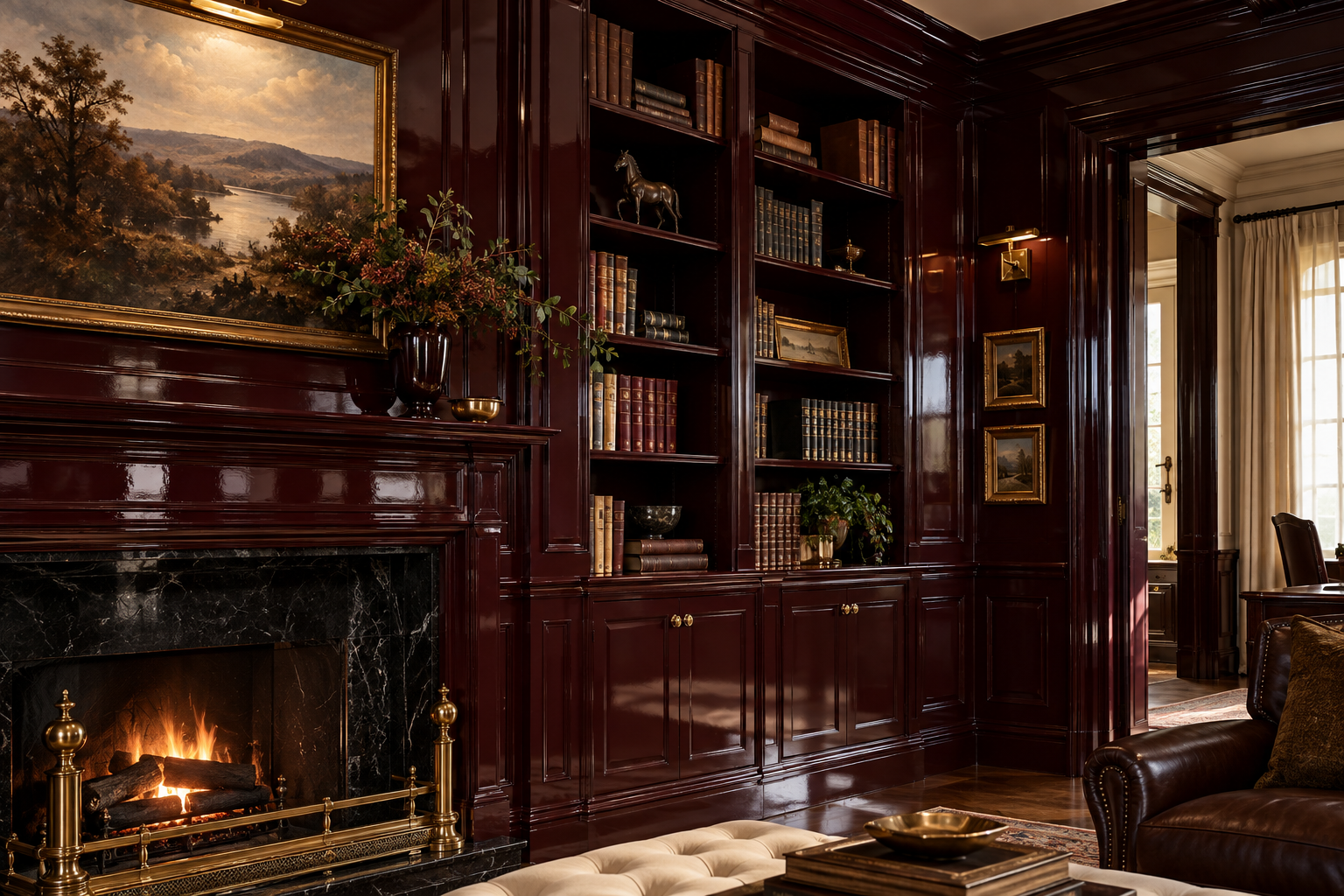
A premium paint job rarely announces itself through one dramatic technique. It is the accumulation of controlled decisions: where to repair, how far to level, which primer to use, how to manage light and where two colors or materials should meet.
The surface comes first
Finish paint cannot erase unstable caulk, poorly feathered patches or sanding scratches. High-end preparation establishes a uniform substrate appropriate to the chosen sheen. Matte walls may tolerate minor character; gloss millwork does not. The promised finish level should be discussed before preparation begins.
Consistency across the architecture
Color, sheen and texture must remain consistent from wall to wall and door to door. Cut lines should follow the architecture, not wander around it. Doors and built-ins benefit from controlled application, adequate drying and careful sanding between coats when the system requires it. Touchups should disappear in normal viewing conditions.
Quality can be inspected
View walls from normal positions in both natural and artificial light. Open doors and drawers. Check edges, hardware, floors and adjacent finishes. A responsible final walk distinguishes true defects from inherent substrate character and records any corrections before the crew demobilizes.
Put the guidance into a real project
Use this guidance during an in-person walkthrough, not as a substitute for one. Record each substrate, existing sheen, visible repair and color transition room by room. Discuss how the space is lit and viewed, which belongings remain, and what “finished” means at walls, ceilings, trim, doors and built-ins. Ask for a representative sample when sheen, patching or millwork quality is difficult to describe. A detailed written scope should connect those observations to preparation, primer, finish coats, protection and inspection. That gives both owner and painter the same standard before production begins.
A practical review checklist
- Scope defines the expected finish level
- Repairs are feathered beyond the damaged spot
- Primer and topcoat form a compatible system
- Edges and transitions respect the architecture
- Final inspection occurs in representative lighting
Frequently asked questions
Is spraying always better than brushing?
No. The best method depends on the substrate, desired appearance, access and ability to control overspray.
How many coats define quality?
Coverage and film build matter more than a slogan. The specified system must achieve uniform color and performance.
Should every imperfection be removed?
That depends on the agreed finish level, existing substrate and the way light strikes the surface.