
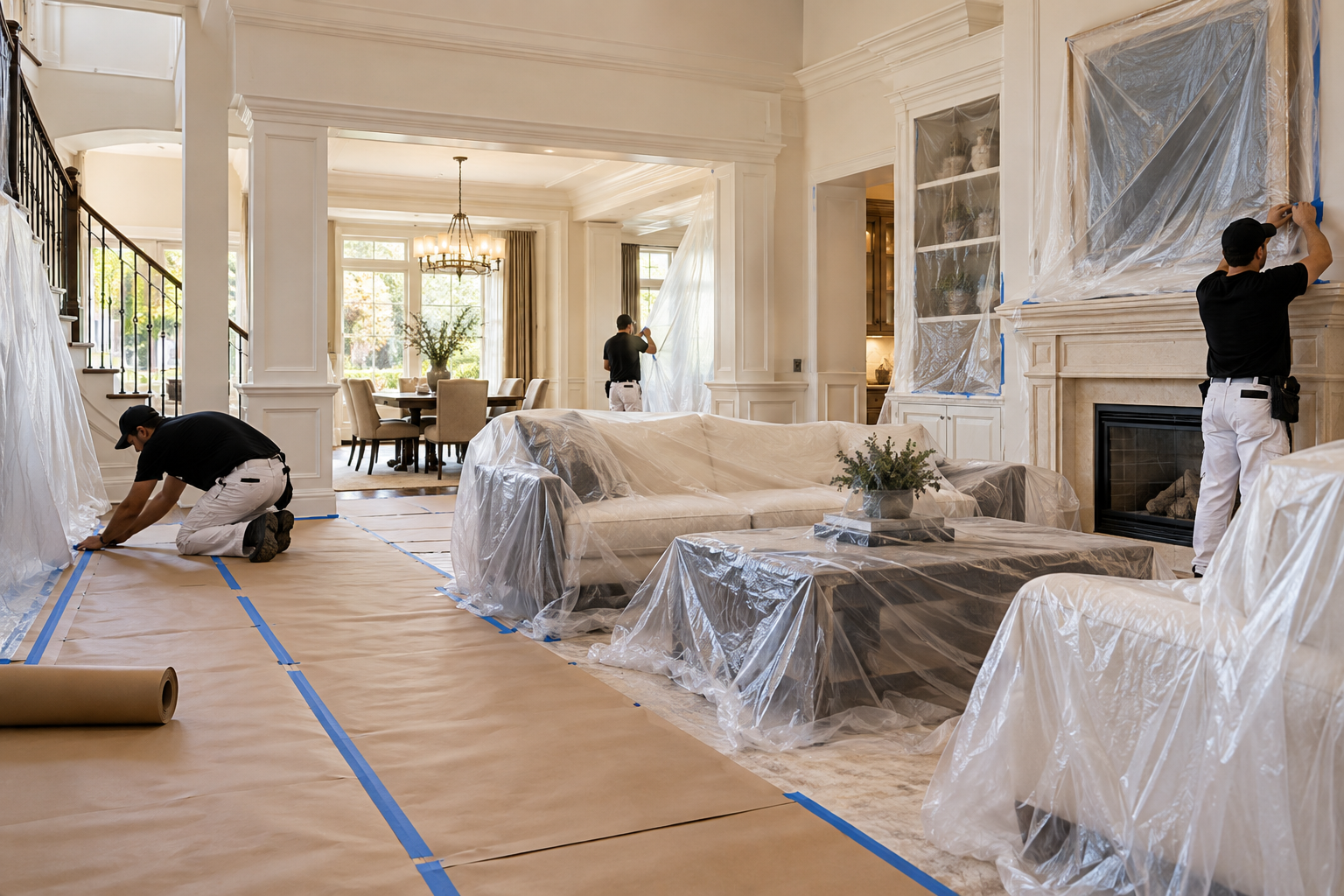
An occupied-home project succeeds when the house remains understandable from day to day. The goal is not merely to avoid paint splatter. It is to control dust, keep pathways safe, protect furnishings and return usable rooms on a predictable schedule.
Build the sequence before work begins
A room-by-room or zone-by-zone plan lets the household know what must move and when. Kitchens, primary bedrooms and home offices need special attention because losing access to them has an outsized effect. Agree on work hours, parking, alarm procedures, pet containment and the order in which rooms will reopen.
Protection is a system
Floors need the right protection for their material; hardwood, stone and carpet do not all receive the same covering. Furniture should be moved or wrapped without trapping it against wet work. Dust-producing preparation may require localized containment and extraction. Hardware, fixtures, art and electronics need a documented plan rather than improvised masking.
Healthy, respectful daily practice
Ventilation and lower-emitting products can reduce disruption, but every coating should still be used according to its label. A professional crew consolidates tools, removes waste, checks pathways and communicates what is wet or unavailable before leaving. The result is a project that feels managed rather than invasive.
Put the guidance into a real project
Use this guidance during an in-person walkthrough, not as a substitute for one. Record each substrate, existing sheen, visible repair and color transition room by room. Discuss how the space is lit and viewed, which belongings remain, and what “finished” means at walls, ceilings, trim, doors and built-ins. Ask for a representative sample when sheen, patching or millwork quality is difficult to describe. A detailed written scope should connect those observations to preparation, primer, finish coats, protection and inspection. That gives both owner and painter the same standard before production begins.
A practical review checklist
- Written room sequence and daily access plan
- Floor-specific protection with safe walking paths
- Dust control appropriate to the preparation
- Daily cleanup and end-of-day update
- Clear plan for pets, children, alarms and keys
Frequently asked questions
Do we need to leave the house?
Often no. The answer depends on project scale, ventilation, occupants’ sensitivities and the products being used.
Who moves furniture?
That should be assigned in the proposal. Heavy, fragile or valuable items may require a specialist.
Can rooms be finished one at a time?
Yes, although drying time and efficient crew sequencing should shape the order.