
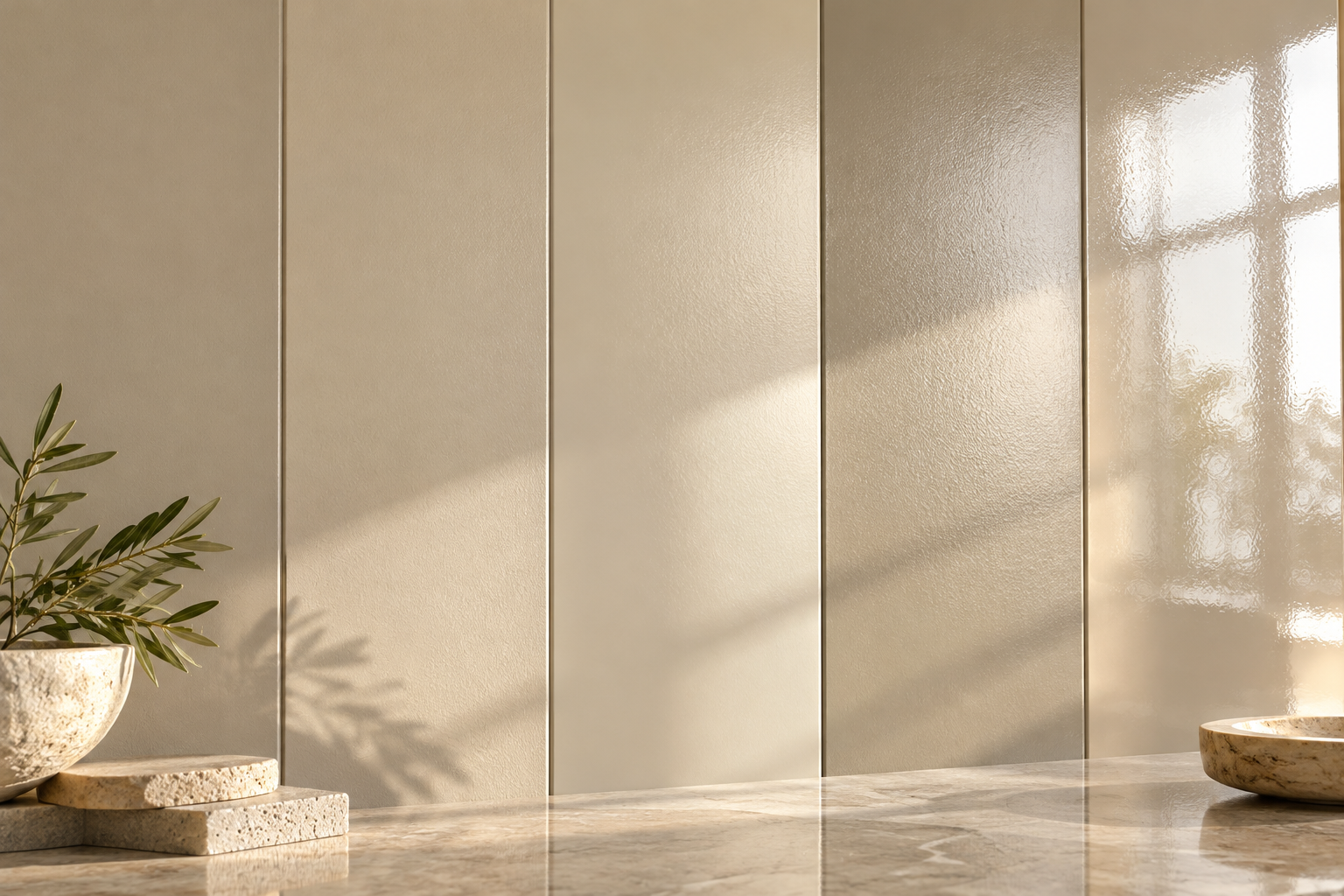
Sheen is the amount and character of light a cured paint film reflects. It affects far more than shine: it changes how a color reads, how easily a surface cleans and how clearly the eye sees patches, waves and tool marks. The right answer depends on the room, substrate and desired architecture.
From quiet matte to reflective gloss
Flat and matte finishes absorb light and feel calm, making them suited to ceilings and sophisticated low-sheen walls. Eggshell introduces a restrained glow and practical washability. Satin and semi-gloss are increasingly reflective and are often selected for doors, trim and demanding areas. Full gloss can be extraordinary on millwork, but it requires exceptional preparation.
Durability is not only about shine
Modern premium matte products can be more washable than older flat paints, so product quality matters alongside sheen. Still, higher-sheen films usually resist moisture and repeated cleaning more readily. In kitchens, baths, entries and children’s spaces, the cleaning routine should be part of the specification.
Sample in the actual room
A sheen sample should be viewed on the intended substrate under daylight, lamps and evening conditions. Grazing light can make a satin wall appear far more reflective than it does on a small chip. Sample color and sheen together because the same color often appears deeper in a more reflective finish.
Put the guidance into a real project
Use this guidance during an in-person walkthrough, not as a substitute for one. Record each substrate, existing sheen, visible repair and color transition room by room. Discuss how the space is lit and viewed, which belongings remain, and what “finished” means at walls, ceilings, trim, doors and built-ins. Ask for a representative sample when sheen, patching or millwork quality is difficult to describe. A detailed written scope should connect those observations to preparation, primer, finish coats, protection and inspection. That gives both owner and painter the same standard before production begins.
A practical review checklist
- Matte: quiet, forgiving and design-forward
- Eggshell: subtle glow with balanced cleanability
- Satin: durable with visibly more reflection
- Semi-gloss: crisp choice for trim and doors
- High gloss: dramatic, exacting and preparation-intensive
Frequently asked questions
What sheen hides wall imperfections best?
Lower sheens generally disguise minor texture and patching better because they scatter less reflected light.
Should trim always be shinier than walls?
No, but a change in sheen creates contrast even when wall and trim colors match.
Is high gloss suitable for drywall?
It can be, but only after intensive leveling, priming and sanding under controlled light.