
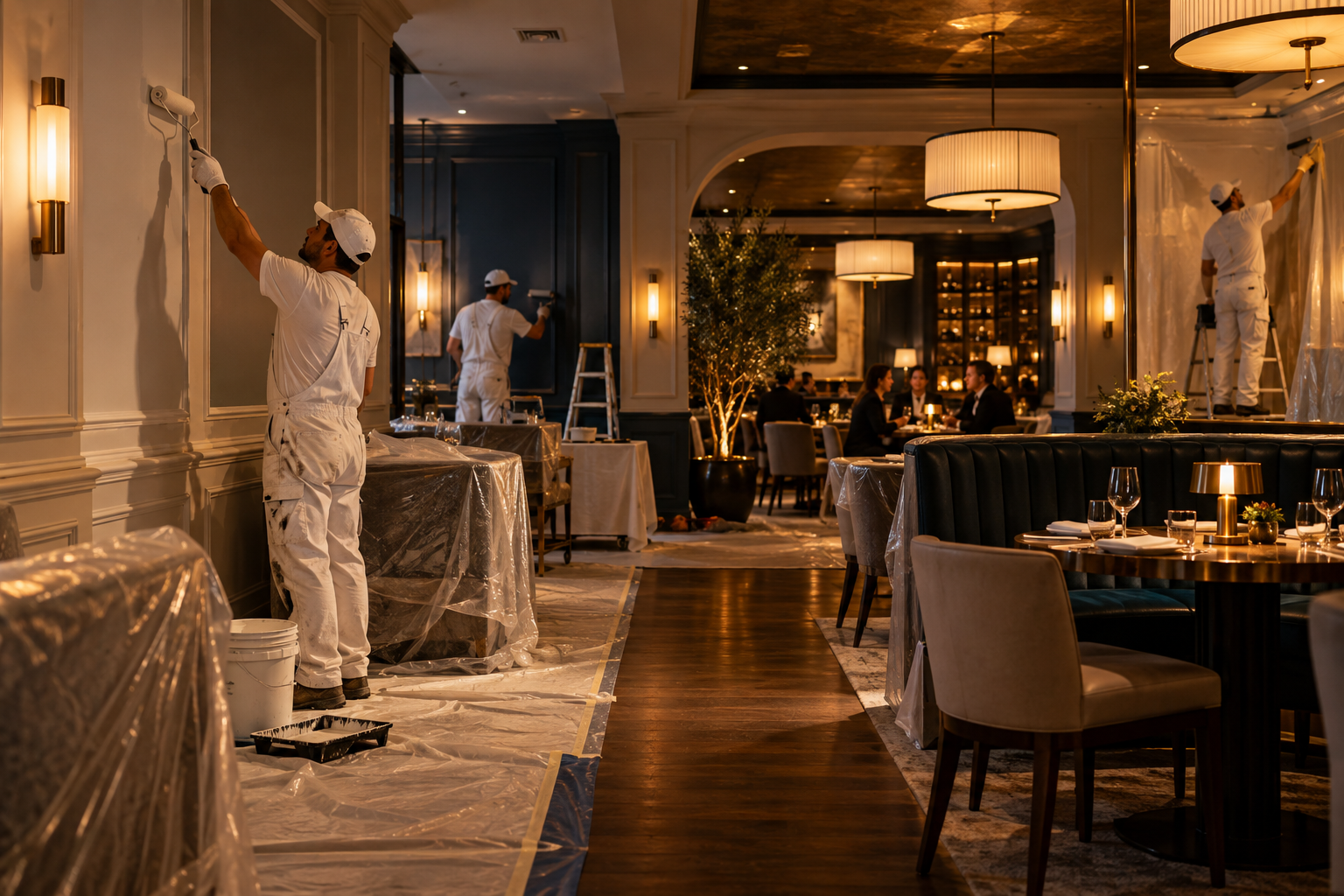
In an occupied business, the work is judged twice: once as a finish and once as an operation. The space may need to reopen cleanly every morning, with no wet edges, blocked exits, unsecured tools or visible dust. That requires a detailed reset plan.
Map zones and closures
Divide the project into areas small enough to complete and reopen within the available shift. Coordinate entrances, restrooms, kitchens, displays, alarms and deliveries. In restaurants, food-service areas and cleaning protocols require particular care and management approval.
Control exposure and appearance
Choose products based on required performance as well as emissions, odor and cure. Ventilation must suit both the coating and the building. Barriers and protection should look intentional to guests when any work remains visible during operating hours.
Reopen by checklist
Before handoff each shift, remove waste, confirm surfaces are dry enough for the planned use, restore furniture and displays, inspect egress, and brief the manager. Photography and a short daily report preserve continuity between night crews and daytime operations.
Put the guidance into a real project
Translate this guidance into an execution plan shared by facilities, operations and the painting team. Mark work zones, access hours, shutdown limits, sensitive occupants, protection needs and the required reopening condition. Pair every substrate with a documented coating system and identify who approves samples and additional repairs. A daily communication rhythm, area turnover checklist and change-authorization path are as important as the product schedule. They keep a technically sound paint job from becoming an operational problem.
A practical review checklist
- Zone map and nightly production target
- Manager signoff and access protocol
- Ventilation and product plan
- Protection and daily reset checklist
- Contingency for incomplete cure or added repairs
Frequently asked questions
Can painting happen while customers are present?
Sometimes in isolated areas, but active application should follow safety, ventilation and operational requirements.
Are zero-VOC products odorless?
Not necessarily. Emissions, odor and performance are related but not identical.
How are touchups handled?
Track them by zone and complete them in a controlled final pass.