
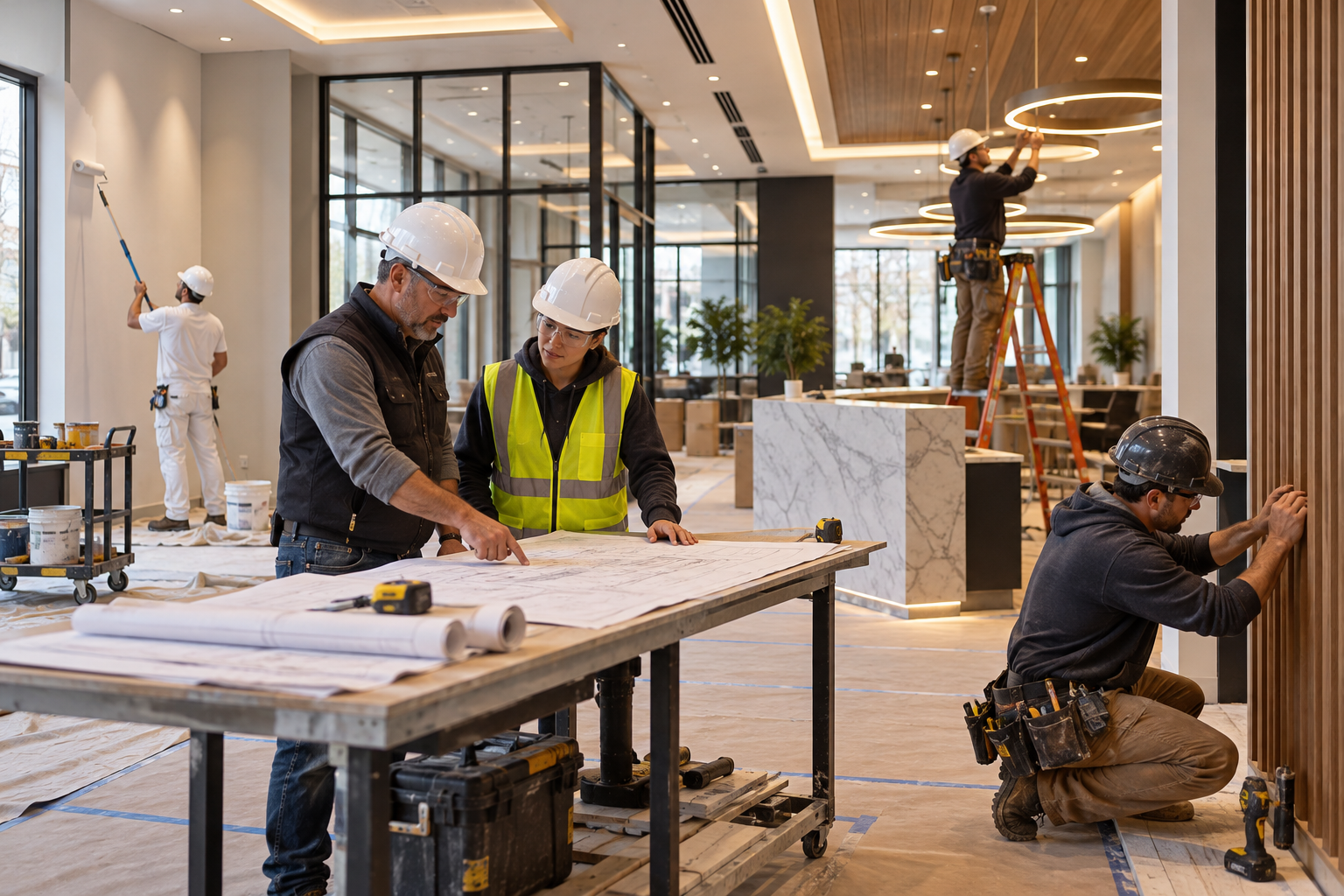
Painting is often treated as a flexible trade that can absorb upstream delays. In reality, rushed sequencing creates damaged finishes, repeated mobilization and preventable punch work. The paint schedule should be built around substrate readiness and the work that follows.
Define prerequisites
Drywall must be finished and dry, moisture-producing work controlled, permanent lighting available where possible and above-ceiling inspections sufficiently complete. Millwork, frames and mechanical elements need agreed installation points. A readiness walk keeps painters from becoming the default repair crew for unfinished work.
Use mockups and milestones
Approve colors, sheens and representative substrate samples before large-scale production. Prime and establish base coats at the appropriate stage, then protect the work. Final coats should follow the heaviest overhead and material-moving activity whenever the schedule allows.
Plan the punch strategically
Rolling quality checks catch damage and incomplete scope by area. A final paint pass should occur after trades complete their own corrections, not continuously around unresolved work. Keep records of colors and batch information, then turn over labeled maintenance material.
Put the guidance into a real project
Translate this guidance into an execution plan shared by facilities, operations and the painting team. Mark work zones, access hours, shutdown limits, sensitive occupants, protection needs and the required reopening condition. Pair every substrate with a documented coating system and identify who approves samples and additional repairs. A daily communication rhythm, area turnover checklist and change-authorization path are as important as the product schedule. They keep a technically sound paint job from becoming an operational problem.
A practical review checklist
- Substrate-readiness checklist
- Approved color and sheen schedule
- Mockup and sample signoff
- Area-by-area protection responsibility
- Dedicated final-coat and punch milestones
Frequently asked questions
Should walls be painted before millwork?
It depends on the design and installation sequence; edges and protection responsibilities must be coordinated.
When should final coats occur?
After most damage-producing work is complete and the environment can be controlled.
Who repairs trade damage?
The contract should define responsibility and how added repainting is authorized.